“When life is sweet, be thankful, and rejoice; but when bitter, be strong, and persevere.” — Matshona Dhliwayo
Autumn LeavesAutumn Leaves
Tomorrow I will make a storied mashed potato recipe. It originated with our dear friend, the irrepressible Sue Grant, who passed away in June 2024.
Recipe for Mashed Potato Casserole
4 cups mashed potatoes, butter (4 T up to 1 stick)
& milk (1/2 to 1 cup), salt and pepper
8 oz cream cheese
1 egg
¼ cup chopped pimento (don’t have, don’t add)
¼ cup finely chopped onion (or much more – I like onions)
Pour into 2-quart baking dish, which is greased
Dot top with more butter and paprika
Bake at 350 for 45 minutes.
Note from Pam:Sue, help! I’ve lost your mashed potato casserole recipe, checked my completely disorganized folder, and it’s nowhere to be found. Wouldn’t you know, everyone in the country wants it for Thanksgiving because I’ve given the recipe to one half of the country and you to the other, and I’ve lost track of it. Please send it. Forgive me for losing it. Can I double the recipe? (Sunday 11/23/2008)
Note from Geoff:Sue says that the quantities aren’t all that important. Pimento and paprika are mostly for color. This dish is good, one of my favorites, but not a diet dish. Perfect for Thanksgiving. Having the actual recipe is so unimportant that Sue typically doesn’t use one or even remember the pimento. She adds way more onion than the recipe calls for. Modify however you wish.
Note from Linnea:When Sue and Geoff joined us for Thanksgiving in Albuquerque in 2012 with other Brookings folks (Joe and Signe Stuart, Terry and Ruth Branson, and many other relatives and friends), Sue made this recipe, introducing it to me for the first time. We’ve been making it for large gatherings and holiday dinners ever since.
If you read We Ran Away to Sea, you may recognize the names of our guestsbecause they all appear in the book. Sue and her husband Geoff also joined us on a sailing adventure in the Virgin Islands in 2013. Recorded in vivid detail in this YouTube video.
Unfortunately, there are not many pictures, none of the whole group, and the quality is poor. We were having too much fun to take pictures.
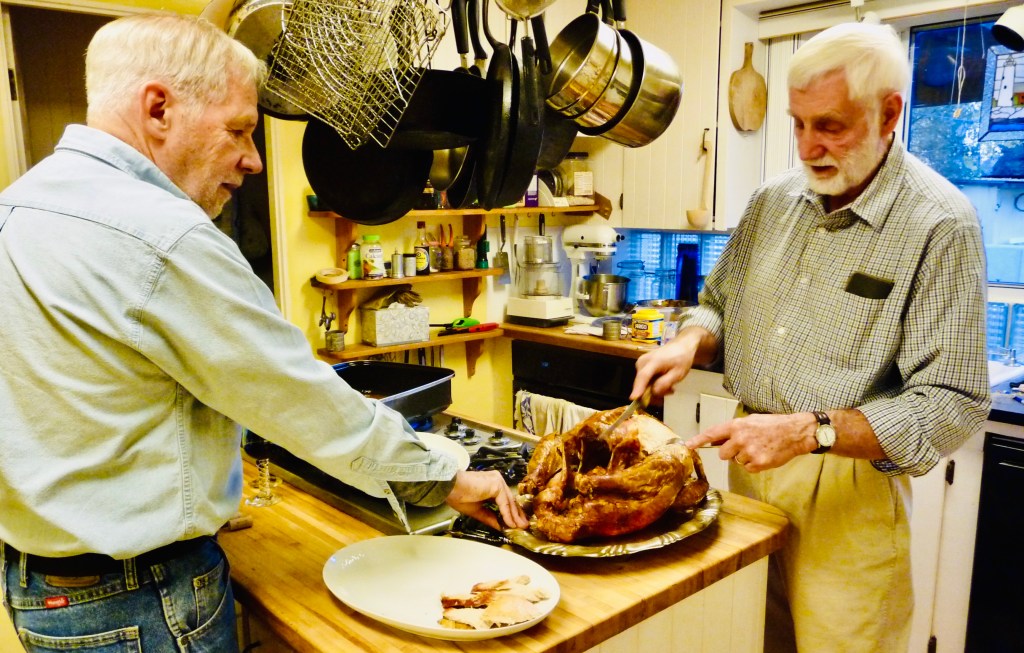
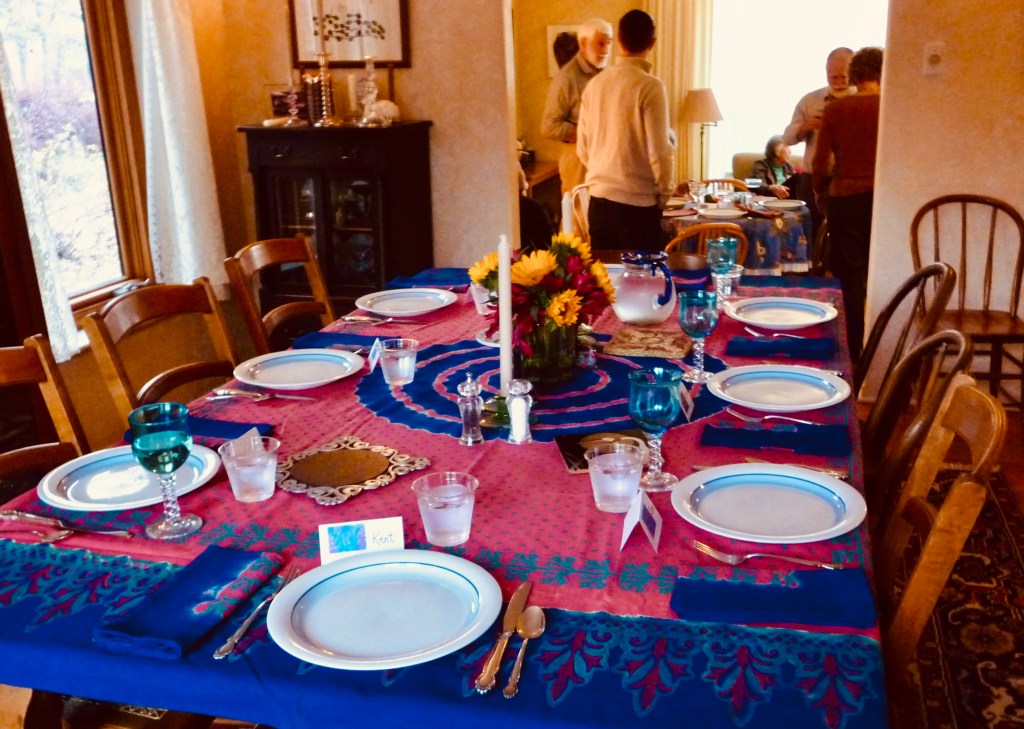
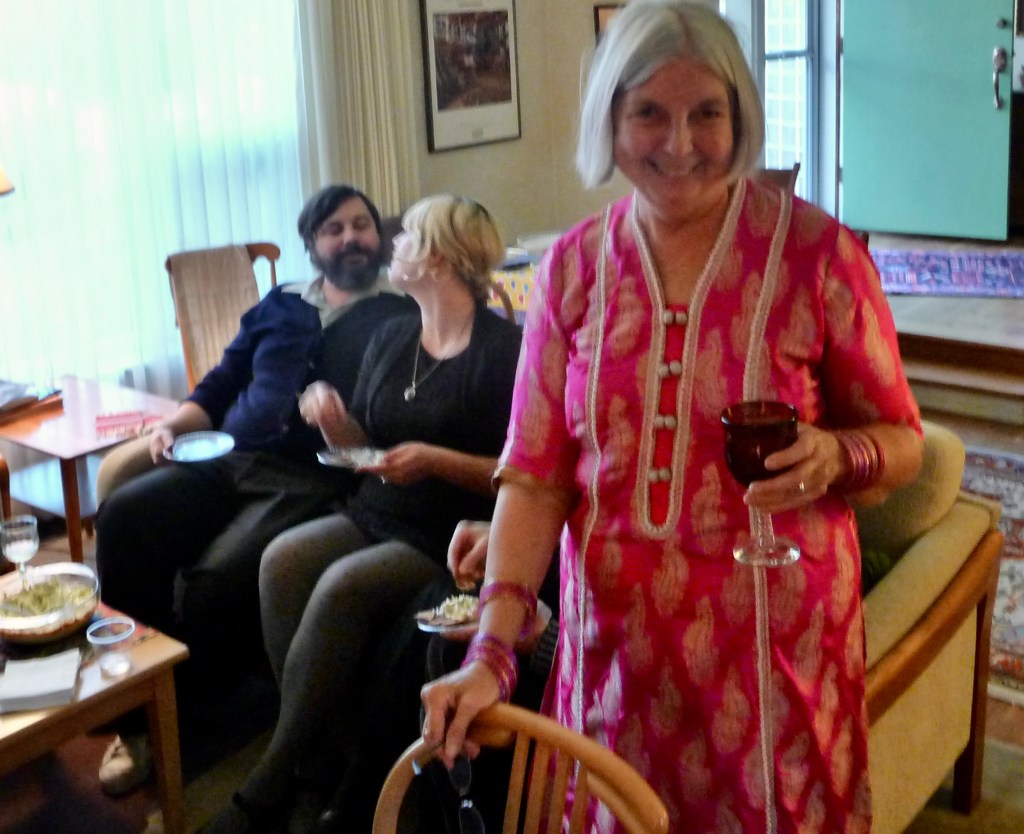
Pictures,Thanksgiving 2012: l-r Terry Branson and Kent, table, Linnea with Jesse & Carrie behind
How many electrical appliances in your kitchen are more than forty years old? Countless electric toasters, microwave ovens, waffle makers, popcorn poppers, hand-mixers, and coffee pots have come and gone in mine, along with an electric knife and a knife-sharpener-can-opener combination that I decided were not worth their counter or storage space.
I still occasionally use an electric frying pan that my brother and I bought as an anniversary present for our parents in the 1960s. It brings back memories of my college days in a first apartment shared by four of us who rotated cooking on a daily schedule. Jane owned the electric skillet, which we put to regular use, frying chicken, making stews, pot roasts, pork chops, hot dogs, and batches of chile (often using recipes from another cherished well-worn antique, the hilarious I Hate to Cook Cookbook by Peg Bracken that contained such memorable favorites as Chilly-Night Chili, Stayabed Stew, and Cockeyed Cake. I owned the cookbook, a gift from the irrepressible Gen Markle, one of my mother’s closest friends, who inscribed it (with my slightly misspelled name), “To Linnae with love, and best wishes for a happy and nutritious year.”
I still occasionally still make Cockeyed Cake. But my usual stand-by these days is an Australian plain cake, which becomes dazzling with the addition of jam or jelly, fresh fruit (strawberries, blueberries, kiwis, raspberries, or whatever is available). A few dollops of Grand Marnier or Amaretto and lots of freshly whipped cream hold the layers together and cover the whole thing. I call it Australian Cake, although there’s probably nothing Australian about it. It was inspired by my friend Jenny in Melbourne, who not only added all the extras to the “plain cake” recipe found in an Australian cookbook but often presented it with the flourish of a ribbon wrapped around it, a particularly clever trick if you don’t have enough whipped cream to cover the sides.
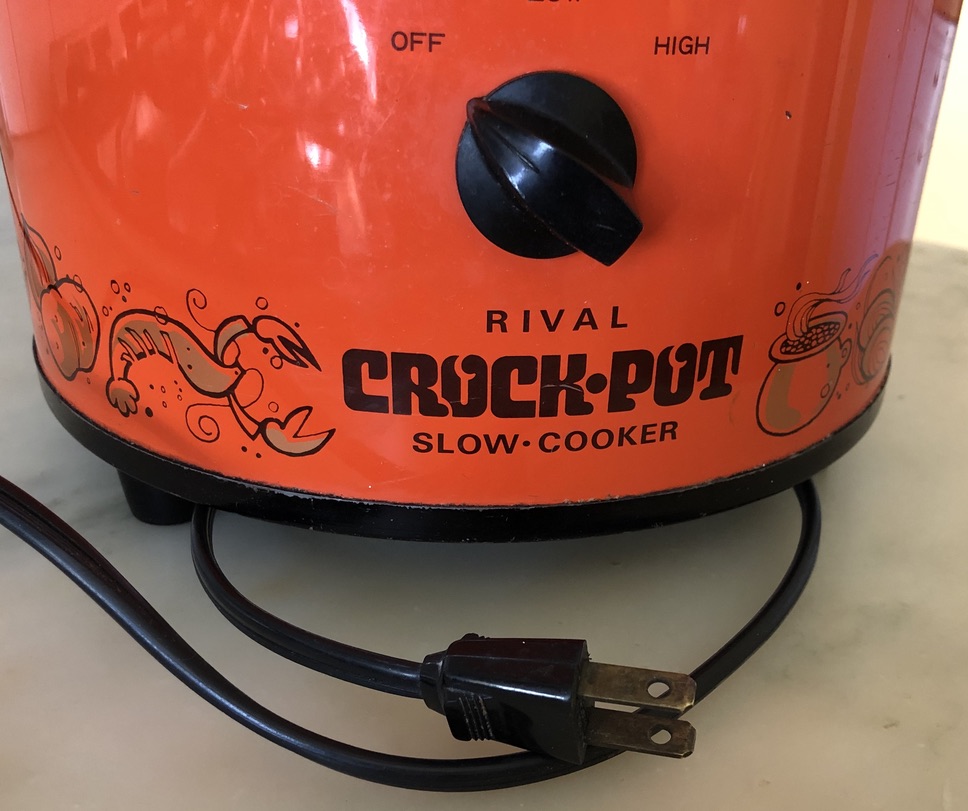
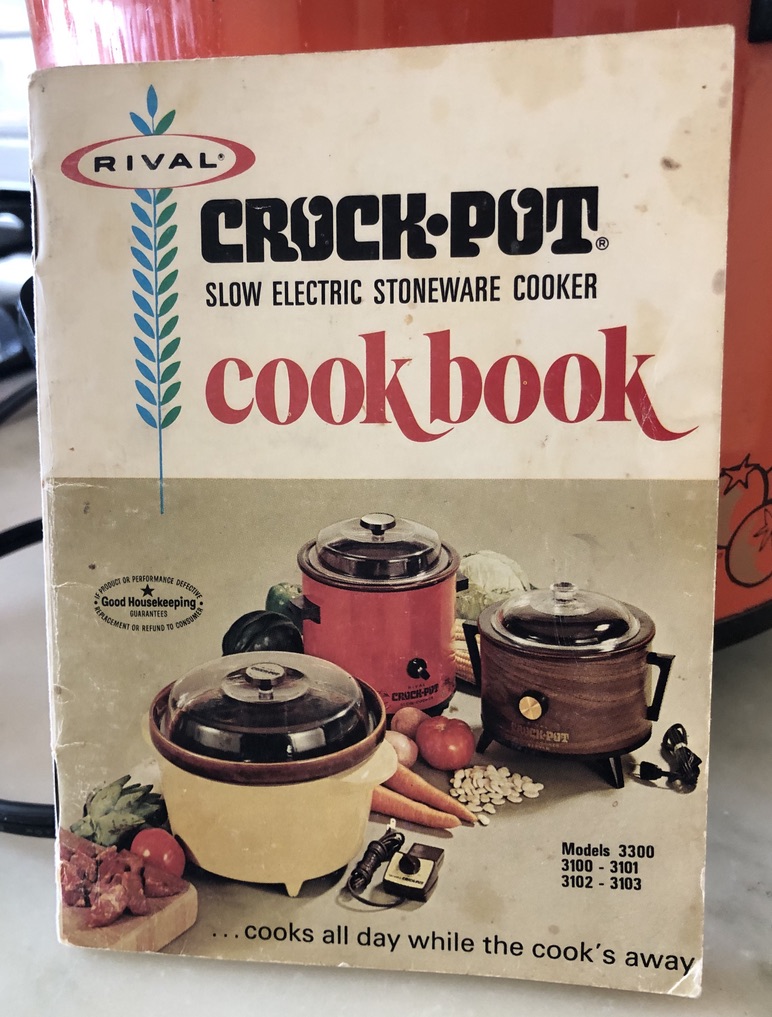
But, my prized long-running-hit kitchen appliance is a flaming orange Rival Crockpot, one of the first purchases I made in 1973 when after four years of living on savings and meager graduate-student fellowships, I finally could afford to buy some extras. I had a real job, teaching at the College of Ganado on the Navajo Indian Reservation in Arizona, and there was a fairly new large FedMart store in Window Rock, a thirty-minute drive over the Defiance Plateau. The store was much like a modern Walmart or an old-fashioned general store, with almost anything one could possibly need or want, at a low price.
I would fill my crockpot with stew meat, carrots, potatoes, onions, and maybe some celery, garlic, and tomato sauce or paste in the morning. Then, I would work all day, or spend a day exploring the countryside before coming home to a delicious hot dinner. As the ads for the crockpot said, “It cooks all day while the cook’s away.”
I’ve never done any of the fancier things the crockpot is said to do, like make cakes or bread, but for years I’ve used it to make pot roasts, stew, and one-pot meals of various kinds. I also sometimes use it to cook dried beans, and in cold weather make hot spiced apple cider, or another old favorite from one of my mother’s close friends, “Hilma’s Holiday Glogg,” (pronounced gloog), a Swedish recipe that involves large quantities of burgundy, raisins, and cardamom seeds, served in teacups with a dollop of vodka or bourbon to top off the already-potent brew.
Over the years, I have relied on the crockpot, whether I’ve been dashing off to work or school, spending a day with guests, or hiking in the mountains. It is wonderful to come home to an aromatic hot dinner and is well worth the twenty minutes or so it takes to prepare the meat and vegetables or dried beans before rushing off in the morning, leaving the meal to cook safely for eight to twelve hours. The meat cooks first, the vegetables more slowly.
I love the simplicity of this old pot, which unlike more recent and more popular incarnations with countless buttons to push for various settings, requires nothing more than an electrical outlet. Its three settings; off, low, and high, are operated by the turn of a dial. What could be simpler? I have looked at the new instant pots, but like my new-fangled oven, which requires an instruction book to operate all its bells and whistles, they seem unnecessarily complicated, although perhaps they can do more. Sometimes less is more, and after almost fifty years, this simple appliance still works perfectly. What more could I want?
Tattered book cover, illustrations by Hilary KnightInscription in the I Hate to Cook Book, 1964Chilly-Night Chili Recipe from The I Hate to Cook Book






 Caminobleu