I think it’s been thirteen years since I’ve returned to Tucson to visit friends I made there in the 1970s and friends I’ve met since. So, this week, we made a whirlwind trip, driving about seven hours each way to spend two and a half days in Tucson. We weren’t able to see everyone, and I forgot to take pictures of some, but I remembered how much I loved the Sonoran Desert, even though the city has grown immensely in fifty years.
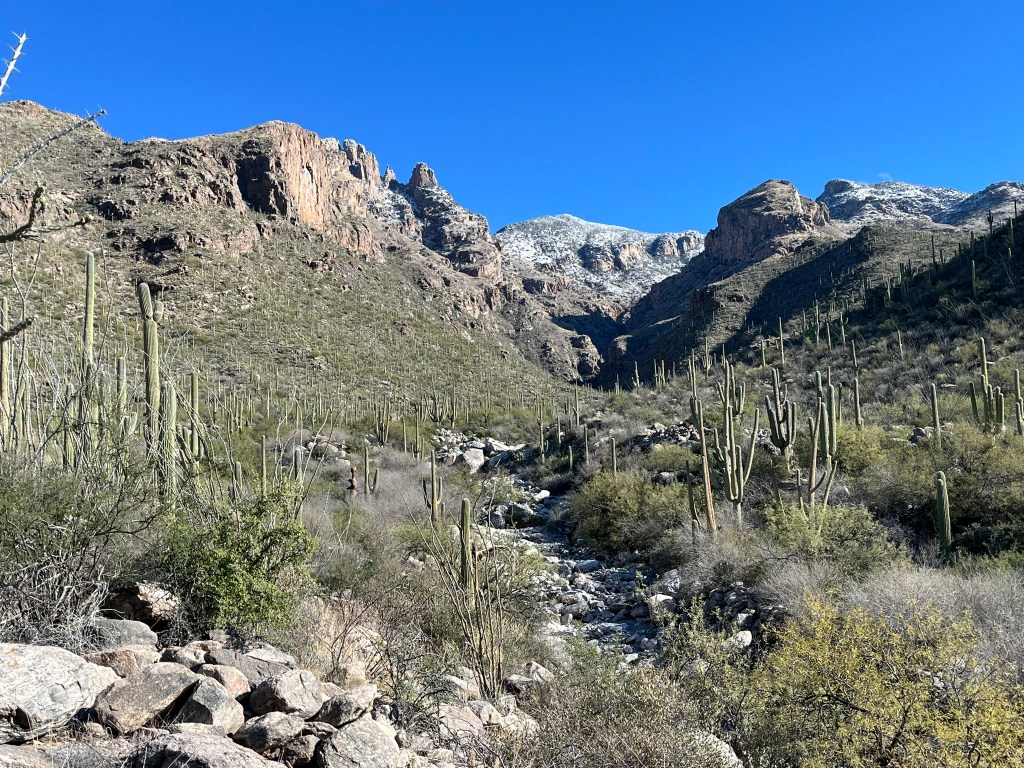
I’d hoped for warm weather, but cold rain from California swept in putting snow on the mountains, which made the desert even more beautiful. It was wonderful to connect with those we did see, including Kent’s son Jake and his friend Hayley. Mary Lyday and I had so much to talk about, we forgot to take pictures.
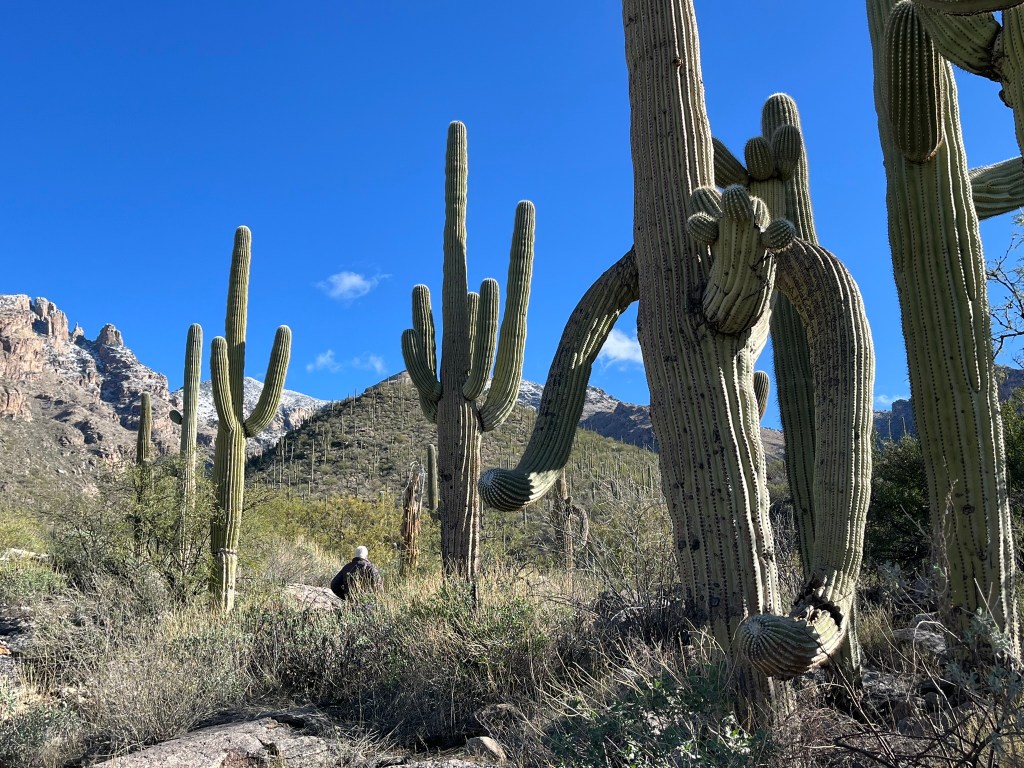
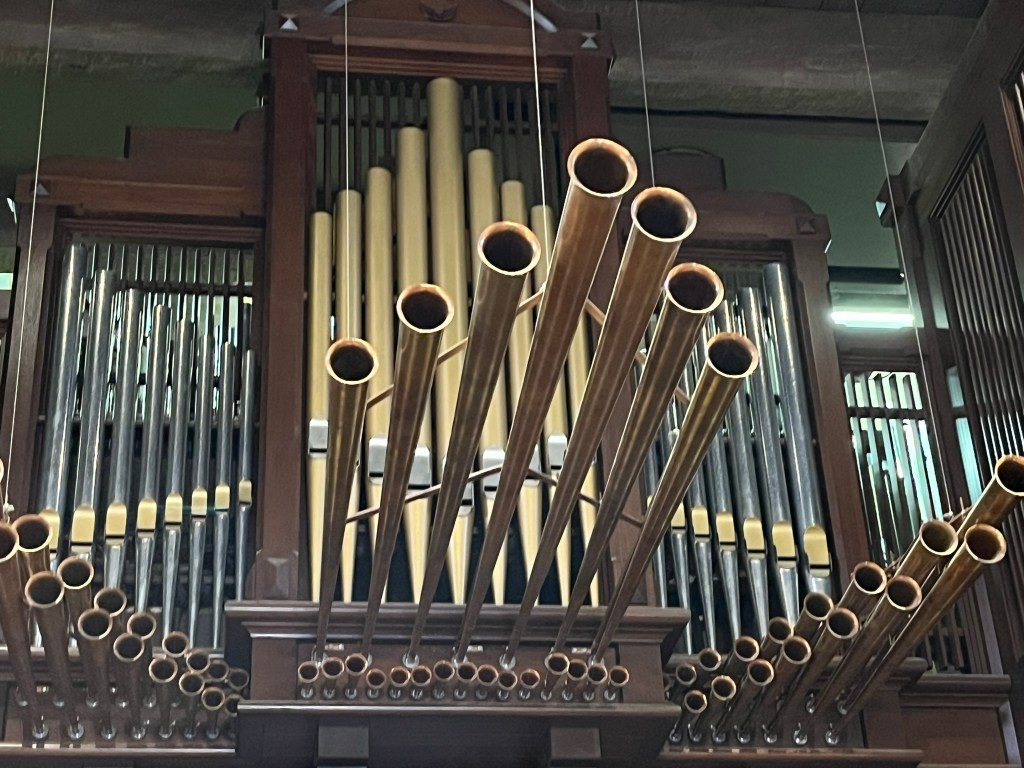
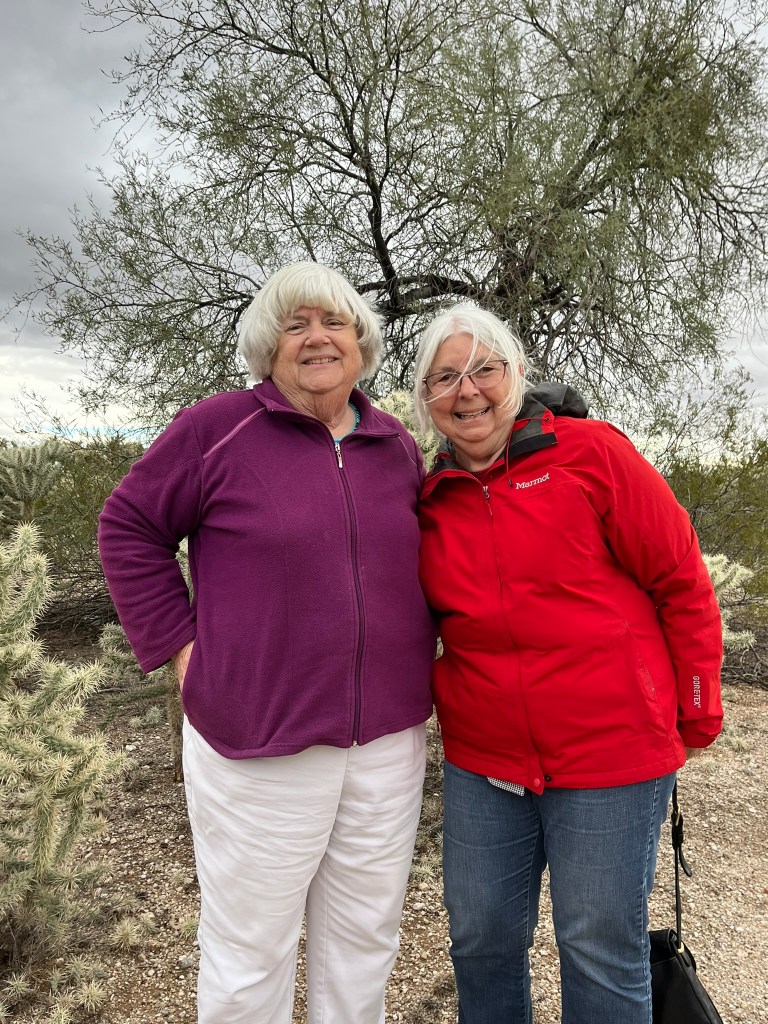
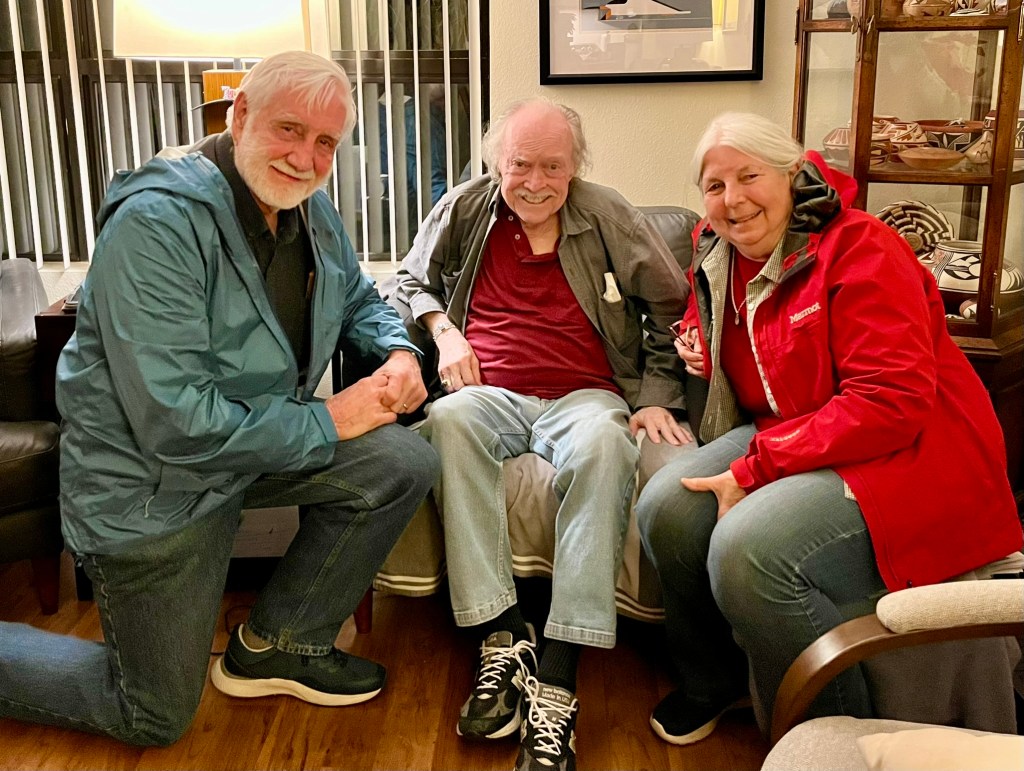
Finger Rock TrailSee the finger between outcrops on top?A Saguaro Cacuts forest!Pipe Organ, St. Philip in the HillsSt. Philip is the HillsCousin Joyce LeissringChris Wallace and I hadn’t seen each other in nearly 40 years!We finally tracked down the unstoppable Ed Curley!
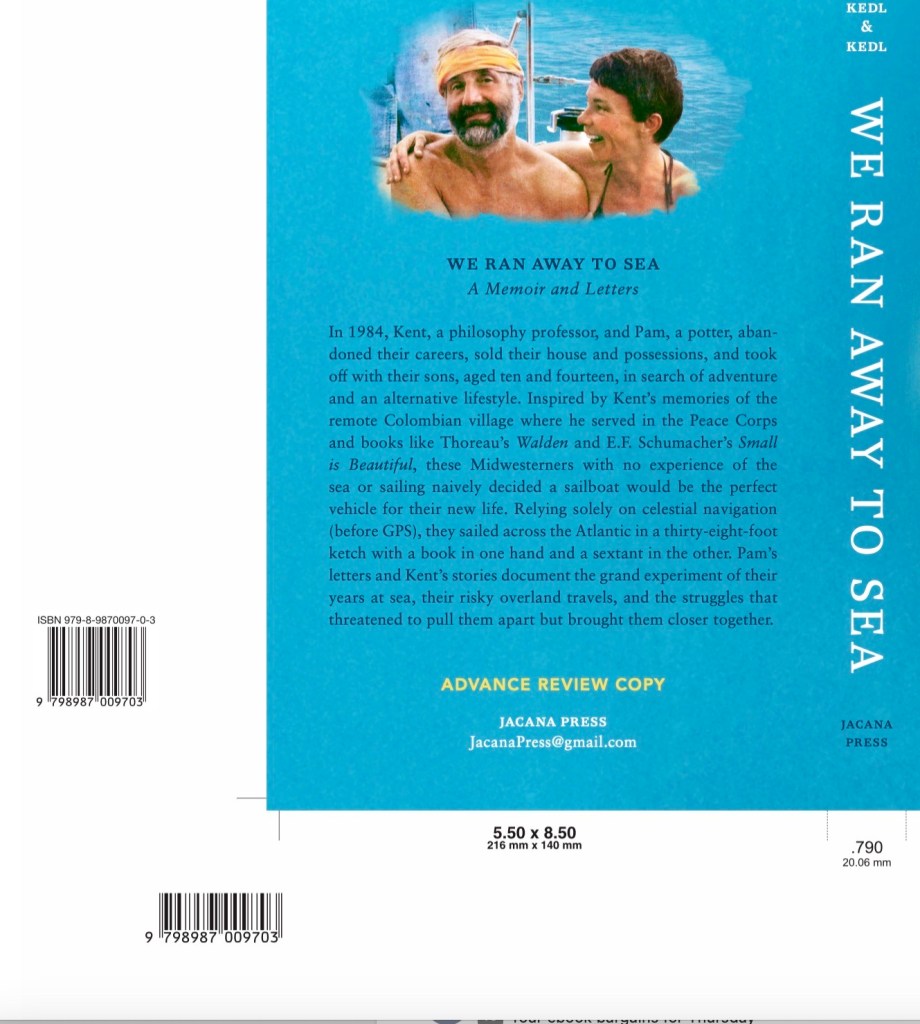
Finally, here’s a push for Kent’s book and a wish for a Happy Valentine’s Day! I realized that We Ran Away to Sea is also a love story! Treasure those you love. We’re not here forever.
I’ve taken a look at my blog for the first time in a very long time. The past six months have been dominated by working on the JacanaPress.com blog featuring my husband Kent’s book. If you look there, you’ll find glimpses of what we’ve been up to, including six intense weeks of travel through Scandinavia in December.
“Why go in the winter?” I’ve been asked. Here is my reply:
Scandinavia is where my ancestors lived 150 years ago and for centuries before that.
Why in winter? I had a checklist: (1) I wanted a challenge and a bit of an adventure, (2) I wanted to avoid crowds and the high prices of the summer season, (3) I wanted to see the aurora borealis, (4) winter and snow bring back memories of my Upper Michigan childhood, (5) snow is beautiful, (6) I wanted to celebrate Christmas with relatives in Sweden and enjoy the Christmas lights and festivities, (7) our grandchildren were going to be elsewhere.
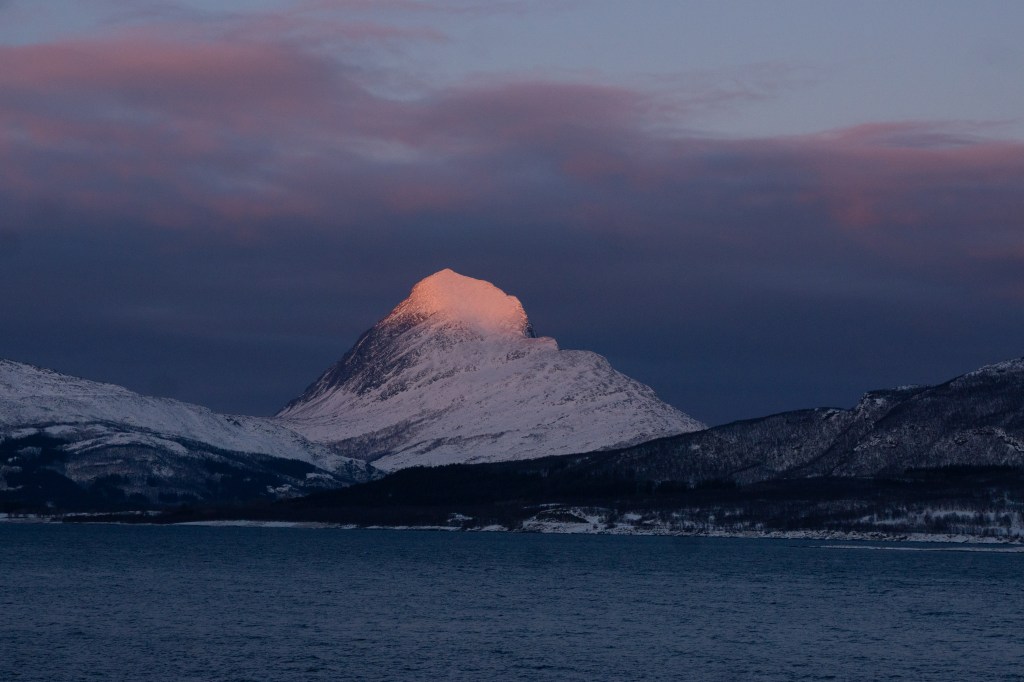
I loved the Polar Night when the day was four of five hours of twilight with the sun lurking below the horizon. I missed the sun, though, and on Santa Lucia Day, December 13, we crossed the Arctic Circle again heading south. I waited with anticipation aboard the ship (Hurtigruten’s Polarlys) for the sun to hit a high peak. My heart leaped up when I saw the first pink light hit the triangular peak I’d been watching. ”Thank you, God, thank you, Sun, for being there!” I was deeply moved. The Polar Night was beautiful, but what if I never saw the sun again?
We arrived home after our travels to face a pile of mail we still haven’t quite gotten through, repairs of things falling apart in the house (I think it missed us), preparing Kent’s lecture, “Escape to Sea: Dreams and Realities” for Oasis (it was well-received), and all the other busy activities that keep us from taking much-needed long walks.
It was a big day today. We got the book loaded onto IngramSpark and ordered the first paperback copy that should arrive in about a week. Publication date is set for June 27, but that could change. A PDF of the book has also been loaded onto NetGalley, so we are hoping for some reviews. We are still finding some typos and small errors (oh no!) and expect to find even more when we actually hold the paperback in our hands. It’s been a long journey so far, and there’s even more to come.
We know we didn’t choose the cover most of you preferred. We’ll see how it goes! But we have the photo of Kent and Pam on the back, if that will make you happier.
We’d love to have more reviewers, although we’re not supposed to use friends and family. I couldn’t believe my eyes when I looked for reviews of a particular book (I won’t divulge the title) this afternoon and saw it had one review of ***** (five stars). The reviewer’s name: the same as that of the author!
I can see we still have a lot to learn!
If you’re interested in reviewing let us know, and if that sounds too daunting, here are a few links to websites that provide some easy guidelines and even templates for writing reviews:
Sierra Nevadas from near the highest point on the Camino Mozárabe above Quentar near Granada, Spain.
Where are the other days? Some are on Facebook. Most nights I’ve been too tired to write. I’ll try to catch up soon., although writing on an iPhone 13 mini is not all that easy.
Another beautiful day on the Camino Mozárabe. On this Thursday 30 March we climbed to the highest point on this Camino, over 1400 meters. total walk about 8.4 miles. We started with a short big up, then a very long smooth down and gentle long climb to the top. Along the way we were buzzed by a helicopter. At the very top we walked through a surreal, blindingly white quarry. The downside, literally and figuratively was a seemingly endless rough, steep, stony track down in the blazing sun on a western slope. My hands look like rotisserie chickens, they are so brown. As we turned onto the highway about a km above the village,our friend Montserrat and Francis passed in a taxi and stopped in the middle of the highway to pick us up. What a coincidence, and much appreciated respite. A short time later we enjoyed a hearty lunch—our first actual meal of the day at the Los Angeles Bar/Cafe in Quentar ( population about 900) as a group of six pilgrims. We were just steps from our hotel, but too busy eating, drinking and chatting and too tired to take pictures, alas. We were Montserrat and Francis from Barcelona, Edgard from Belgium, and Garis from Victoria, Australia. Tomorrow Granada! all of us are in the Hotel Quentar, spanking clean with an elevator to the second (third) floor, where Kent and I have a comfy room with —-a bathtub! What a treat for aching legs and feet. I fell asleep shortly I got out with a little help from Kent!
Sierra Nevada near Granada, Spain painting by John Singer Sargent
We leave for Spain today to walk our first Camino since 2019.
It’s been hard getting ready this time. We feel so much older, and technology seems to thwart us at every turn. We’re walking the less-traveled Camino Mozárabe from Alméria to Granada, Córdoba, and Mérida. We know we will not walk every step of the way, but we look forward to experiencing the stillness of remote places and the rituals of Semana Santa in Granada, Córdoba, and a few small villages in between.
I feel as uncertain, fearful, and unprepared as I did when I set out on my first Camino thirteen years ago. Maybe it is the usual pre-trip jitters, but getting ready has been unusually difficult. It is partly because we are leaving Kent’s book, We Ran Away to Sea, which has occupied us for most of the pandemic, still in progress. We anticipate publication on June 2, 2023. If anyone would like to send us a pre-publication review, even brief, let us know. We’ll send you a PDF review copy. Wish us Buen Camino!
Zachary, the bright, sweet blue-eyed blond child who was my daughter’s best friend when they were both three years old, died suddenly last Thursday at the age of thirty-nine. He left a wife and much-loved young daughter and outlived an infant son. During his golden childhood, we were all charmed by his intelligence, creativity, and outgoing personality. He became a highly regarded firefighter. One of his first jobs was rescuing people during the horrifying aftermath of Hurricane Katrina. After several years, post-traumatic stress syndrome, exacerbated by the loss of his infant son, sidelined him. He subsequently earned a degree in business and became a successful manager, but Zak’s heart was not in the business world. His final success came as a stand-up comic who was becoming well-known. His associates, stunned by his death, praised his many abilities and kindness. He was everyone’s best friend.
When Zak and Psyche were three, his mother, Susan, and I decided to take the two on a week-long trip to Hawaii. We must have been slightly nuts, but despite some wild moments, it was a fabulous holiday. The two children laughed, talked nonsense, and sang nonstop (when they didn’t fall asleep) in their side-by-side car seats while Susan and I took turns driving and finding our way around Oahu. The kids didn’t squabble, and we two moms got along pretty well, too, despite having different travel styles. Susan always laughed that she packed snacks of Chips Ahoy cookies, Lifesavers, and chocolates, while I carried bags of carrot and celery sticks.
We were undoubtedly somewhat distracted as we walked through Waikiki when suddenly, both children disappeared. We discovered Psyche streaking off to explore something that caught her interest and Zachary talking to people. Their behavior reflected their personalities: Psyche, the explorer, and Zak, the conversationalist and a people person.
When the audience was invited to join hula dancers on a stage, Zachary ran up, wearing his bright red lava lava and lei, dragging his mother along. His theatrical inclinations were already evident. Psyche, on the other hand, was too shy to dance, so I didn’t get to hula. Eventually, on our last evening in Honolulu, Zak prevailed upon her to dance with him on the outdoor stage in the moonlight at the elegant Halekulani Hotel. Afterward, they both said, “Now we’re married.”
When Zak and Psyche were four, our family left to live in Australia for a year. Unfortunately, in those pre-vaccination days, Psyche came down with chicken pox just before we left. We separated her from almost everyone who gathered in the park across from our house for a goodbye picnic. But Zak insisted he would still love Psyche and wanted to see her, even if she had spots on her face and he might come down with chicken pox himself, but when he saw her, he said, “Euuw!” and didn’t get closer.
Psyche and Zak as creative three-year-olds
Zachary and Psyche stayed in touch intermittently during their busy adult lives in far-flung locations. Although we don’t see each other often, Susan and I have remained close, sharing our concerns about our children and grandchildren and the losses and joys in our lives. Now we are joined in the grief of a life cut short.
It has been a busy week with the grandchildren here, and our house filled with more activity than we are used to. So, apologies to those of you to whom we didn’t get around to sending personal messages this year.
I woke up shortly after three this morning. I don’t know why. Perhaps I subconsciously knew that this was the birthday of my two children, now thirty-nine and forty-three years old. But I wasn’t thinking of them, and I wasn’t worrying about world problems. I was wondering what had happened to the Global Entry renewal I’d applied for months ago. Where was the notification? Had I mislaid it? My restless mind would not let me fall back to sleep.
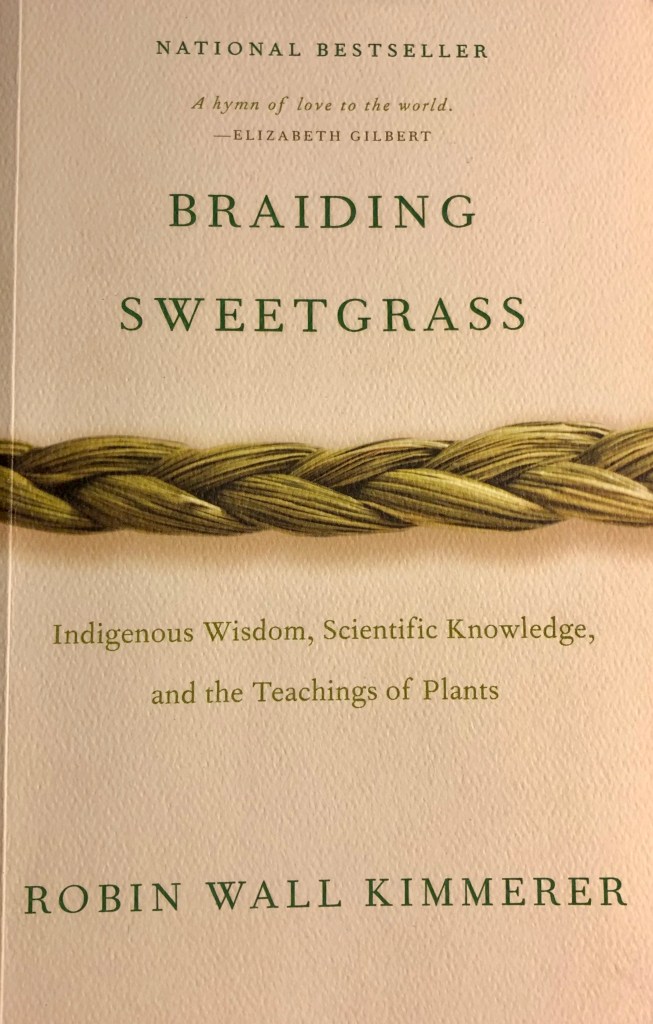
When I despair over the fate of Mother Earth and our nation, reading and reflecting on my past can provide balance and respite. So, I got up, taking Robin Wall Kimmerer’s beautifully written Braiding Sweetgrass with me. Her book of stories combines scientific and indigenous knowledge. The chapter “Sitting in a Circle” reminded me of my childhood. Our small group of Elder Activist Readers has been sharing our responses to books on climate change and the environment for nearly two years. Each book has been enlightening and challenging us in its own way. Right now, we are reading and discussing Braiding Sweetgrass.
But before settling into the book, I needed to check on the Global Entry application. Luckily, I could log in with only a verification code texted to my phone. I discovered that the application was still in progress, just as it had been on March 17. Why? My husband got his renewal in two days. Maybe they think eighty-year-olds have no time to waste? Perhaps they discovered some secret in my past? I shot off a message to the help page (which still has not responded two weeks later) and returned to Braiding Sweetgrass and my childhood.
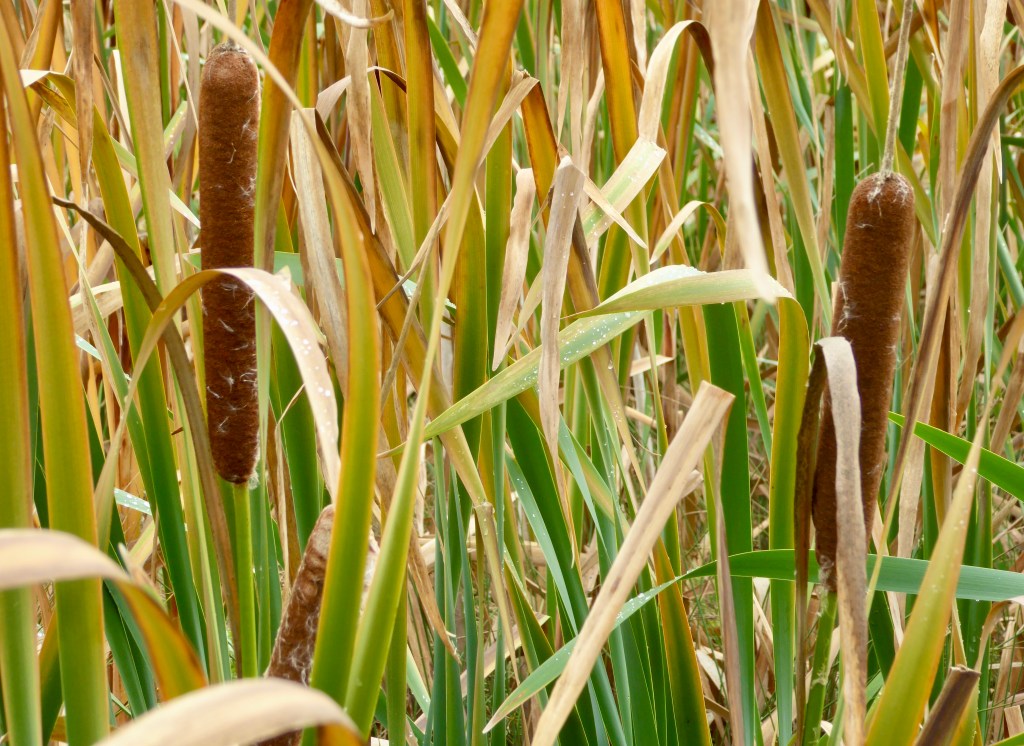
In the chapter “Sitting in a Circle,” Robin Wall Kimmerer takes a group of university students to the woods to discover what necessities of life they can find there. They joke about going shopping at the “Wal-marsh,” but are appropriately awed when they learn that cattails can supply almost everything needed to sustain human life.
When I was a child, cattails beckoned from the ditches along the roads in my Upper Peninsula of Michigan home. Although they looked near, they were difficult to reach without falling into deep ditches and getting wet. One day, my brother and I convinced our father to stop the car and pick some for us. It was fall, and the cattails were overripe. As we stroked the furry brown tails in the back seat of the car, they exploded into a storm of fluff that filled the air and clung to everything, much to my mother’s dismay. My father stopped the car and chucked out the offending cattails. He never picked any again, and even when they were green, they were never allowed in the car despite our begging,
t those fat brown tails and their dramatic tall leaves always fascinated me. It was not until I read Braiding Sweetgrass that I discovered the many uses of cattails. There is food in the stems, fruit, and rhizomes. Insulation and bedding can be made from fluff. Sleeping mats and roofs are constructed from waterproof leaves, and the protein-rich pollen is added to pancake flour. The stems also contain an aloe-like gel to soothe skin irritated by mosquito and black fly bites, and hands chafed from pulling the cattail leaves. I am sure local indigenous people could have told us about the many gifts cattails provide, but as far as I know, no one bothered to consult them.
In summers, we picked dandelions and braided them into crowns. But I was an adult before I made dandelion fritters. We made hats of ferns, but I have yet to eat the fiddleheads that emerge in spring. We learned that the plump, sweet red wintergreen berries and the not-so-sweet but still refreshing leaves that emerged from under the melting snow were good to eat at a time of year when little else was edible. However, we were cautioned never to pick and eat wild mushrooms, although we knew some people did. Our parents told us that one mistake in identifying a mushroom could mean death.
Although we were warned not to eat things we didn’t know about, beautiful sumac bushes with lovely, fuzzy pyramidal spikes of fruit grew on the roadside near my grandfather’s farm. “Poison sumac,” the grown-ups called it, although they couldn’t tell us whether it was poisonous. We picked some of the fruit and, risking our lives, sucked on it – discovering it had a slightly sweet, astringent taste. We suffered no ill effects, but our elders disapproved. There was no internet in those days, but today, I looked up sumac and found it is possible to buy sumac seasoning, make sumac lemonade, and use the berries for many other things. I also learned that the poison sumac plant is different and more closely related to poison ivy. I also discovered it is possible to buy ingredients made from the various parts of cattails.
We knew wild gooseberries and black and red raspberries were good to eat. We ate the sour chokecherries that grew on shrub-like trees in the fields, and juneberries that I later learned were called Amelanchier, shad, or serviceberry. Sometimes we found the branches of the juneberry bushes pulled down to the ground by bears, making it easier for us to reach any that were left.
We ate apples that grew wild in the hedgerows along the roads. My mother told us the apples had probably grown from cores she had thrown as a child. They are growing there still – perhaps some of them from the apples I once ate and tossed.
In August, the blueberries ripened, and word spread around town about where they grew the thickest. There were good crop years and bad. We had to watch for bears when we picked. Robert McCloskey’s Blueberries for Sal was one of the only books I had as a child that depicted a life like mine. Little Sal wore overalls, not a dress, and walked in woods and fields that looked like those I knew, not the manicured parks that passed for the woods in other books.
Kimmerer writes (on page 200) that the wildflowers and plants that flourish in old-growth forests do not return in the new-growth forests. My mother often took my brother and me into “Grammy’s woods,” a mature hardwood forest, where she showed us the spring flowers: hepaticas, bloodroot, dog-toothed violets, sweet violets, dutchman’s breeches, trilliums, jack-in-the-pulpits, lady’s slippers, and more.
My childhood friend Linda, who became an anthropologist, and I, now in our seventies, sometimes reminisce about our childhood adventures and reflect on how our explorations in the Upper Peninsula woods have influenced us. The eighteenth-century proverb goes, “Just as the twig is bent, the tree’s inclined.” Now we exchange recommendations for books and zoom lectures and try to acquire some of the indigenous knowledge we missed out on as children.
Elder Activist Readers’ Book List (in order of reading as of June 2022)
Ayana Elizabeth Johnson and Katharine K. Wilkerson (eds). All We Can Save: Truth, Courage, and Solutions for the Climate Crisis, 2020 (read Jan 2021)
Shalanda H. Baker. Revolutionary Power: An Activist’s Guide to the Energy Transition, 2021 (read Mar-Apr 2021)
Arlie Hochschild. Strangers in Their Own Land: Anger and Mourning on the American Right, 2016 (read June 2021)
Kate Haworth. Doughnut Economics: Seven Ways to Think Like a 21st Century Economist, pub 2017 (read Jul/Aug 2021)
Lydia Millet. A Children’s Bible (a novel), 2020 (read Jan 2022)
Paul Hawken. Regeneration: Ending the Climate Crisis in One Generation, 2021 (read Feb/Mar 2022)
Kristen Olsen. The Soil Will Save Us, 2014 (read Apr/May 2022)
Robin Wall Kimmerer. Braiding Sweetgrass, 2013 (read June 2022)
While my friend Lydia and I were walking along the North Valley irrigation ditches the other day, we came across a narrow plank bridge. The path ended just beyond it, so we had to cross or turn back. As we got closer, it was evident that the bridge was wider than it looked from a distance, but after we crossed, I said to Lydia, “Go back to the other side again, and I’ll take your picture.”
She ran back and forth more than once, and I warned her, “Be careful! Keep doing that, and you might fall in!” There is such a thing as tempting fate. And I told her about a childhood incident when I tempted fate on a narrow plank one time too many
Lydia on the Ditch, Albuquerque, April 2022
I thought I’d write that story, but I soon realized I had gaps in my memory. What I did remember was my heavy, pink wool coat with matching snow pants and a hat that tied under my chin. Could I find a picture of a similar ensemble?
I tried a Google search, and although I found some pictures of 1950s snowsuits and girls’ winter coats, none of them looked much like mine.
I didn’t think I had a picture of me wearing it, but a search of my photo files on Flickr hit the jackpot. There I was, posing with what I intended to be a fetching look. I see a contrived smile, and eyes looking up from my demurely bowed head. Was I already at that young age channeling Audrey Hepburn? I don’t think I’d yet heard of her.
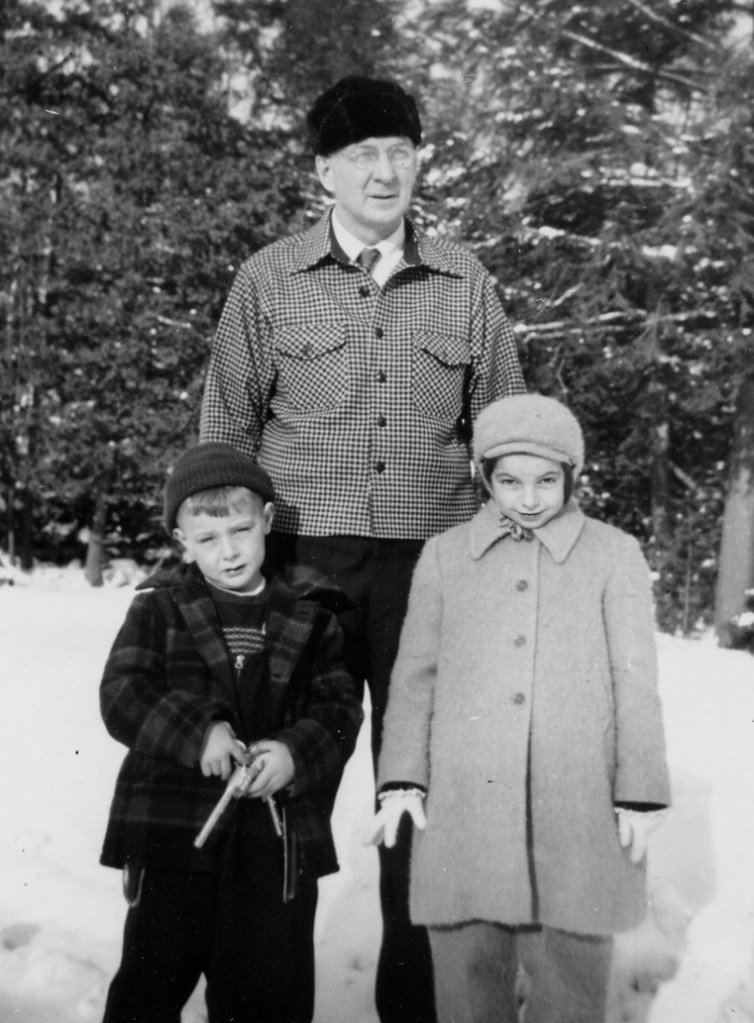
Leonard, John and Linnea Hendrickson, circa 1952
My pink ensemble was more suitable for dressing-up than for sledding or skiing, but it was warm. The coat reached almost to my knees, and the heavy, lined pants kept my legs toasty. The hat, with its puffy crown and little brim, tied under my chin with a ribbon and was probably more decorative than practical.
Our father stands resolutely behind us with a hint of a smile, probably meant to please my mother behind the camera. His necktie is slightly askew behind his checked wool shirt, and his soft black beaver cap sits impressively on his head. My brother, holding sticks or a slingshot, looks decidedly unhappy at having to pose. His jacket is unbuttoned, and our father is not wearing an overcoat, so despite the snow on the ground, it must have been quite warm, much like the early spring day of my story.
But there is one more bit of background before I can tell the tale. The southeastern section of Michigan’s Upper Peninsula has many artesian wells. When a pipe taps into an underground aquifer, water flows freely to the surface. In some cases, the water pressure is enough that the water can shoot fifty feet into the air. A little research reveals that the area between Naubinway and Engadine (a distance of perhaps ten miles) has the highest incidence of these wells on the entire peninsula.
My parents were taking a Sunday afternoon drive in their two-toned green Chevy sometime in the early nineteen fifties. My guess is that it was March or early April, with temperatures moderating, but snow still on the ground. My friend Danny and I sat in the back seat, but I don’t remember if my brother John was with us, and he doesn’t either. We were traveling along that stretch of U.S. 2 between Naubinway and Engadine, and I begged to stop to get a drink at a very large flowing well where water bubbled into the air before falling into a pond surrounded by a swampy stand of trees.
Danny and I jumped through the wet spring snow until we reached a green, slime-covered wooden plank that stretched across the pond to the pipe from which the water poured. What fun it was taking turns running back and forth on that slippery plank to sip the water from the pipe. We did it again and again while my parents waited impatiently.
“Get back in the car before you fall in!” my mother finally called, making the running even more fun.
“One more time!” I called.
Then, dressed in my heavy wool snowsuit, I slipped and went head over heels into the icy, cold, slimy green water. The wool absorbed the water, weighing me down, but I struggled to my feet like a creature from the black lagoon and, with the help of my mother, who ran to save me, managed to climb onto solid ground. Green slime covered me and my pink outfit. Danny laughed hysterically as my mother poured the water out of my boots, stripped off my wet clothes, and wrung them out as best she could, leaving me dressed in only my underwear. She dropped the sodden clothes into the trunk of the car and wrapped me in a blanket. Danny and I snuggled under the blanket in the back seat and laughed all the way home. I suppose the snowsuit went to the cleaners. Or maybe I never wore it again.
Danny and I remained friends until his death, a year after our fifty-year class reunion. I’m sorry I won’t see him again this summer to laugh once more and share our memories of that day.
How many electrical appliances in your kitchen are more than forty years old? Countless electric toasters, microwave ovens, waffle makers, popcorn poppers, hand-mixers, and coffee pots have come and gone in mine, along with an electric knife and a knife-sharpener-can-opener combination that I decided were not worth their counter or storage space.
I still occasionally use an electric frying pan that my brother and I bought as an anniversary present for our parents in the 1960s. It brings back memories of my college days in a first apartment shared by four of us who rotated cooking on a daily schedule. Jane owned the electric skillet, which we put to regular use, frying chicken, making stews, pot roasts, pork chops, hot dogs, and batches of chile (often using recipes from another cherished well-worn antique, the hilarious I Hate to Cook Cookbook by Peg Bracken that contained such memorable favorites as Chilly-Night Chili, Stayabed Stew, and Cockeyed Cake. I owned the cookbook, a gift from the irrepressible Gen Markle, one of my mother’s closest friends, who inscribed it (with my slightly misspelled name), “To Linnae with love, and best wishes for a happy and nutritious year.”
I still occasionally still make Cockeyed Cake. But my usual stand-by these days is an Australian plain cake, which becomes dazzling with the addition of jam or jelly, fresh fruit (strawberries, blueberries, kiwis, raspberries, or whatever is available). A few dollops of Grand Marnier or Amaretto and lots of freshly whipped cream hold the layers together and cover the whole thing. I call it Australian Cake, although there’s probably nothing Australian about it. It was inspired by my friend Jenny in Melbourne, who not only added all the extras to the “plain cake” recipe found in an Australian cookbook but often presented it with the flourish of a ribbon wrapped around it, a particularly clever trick if you don’t have enough whipped cream to cover the sides.
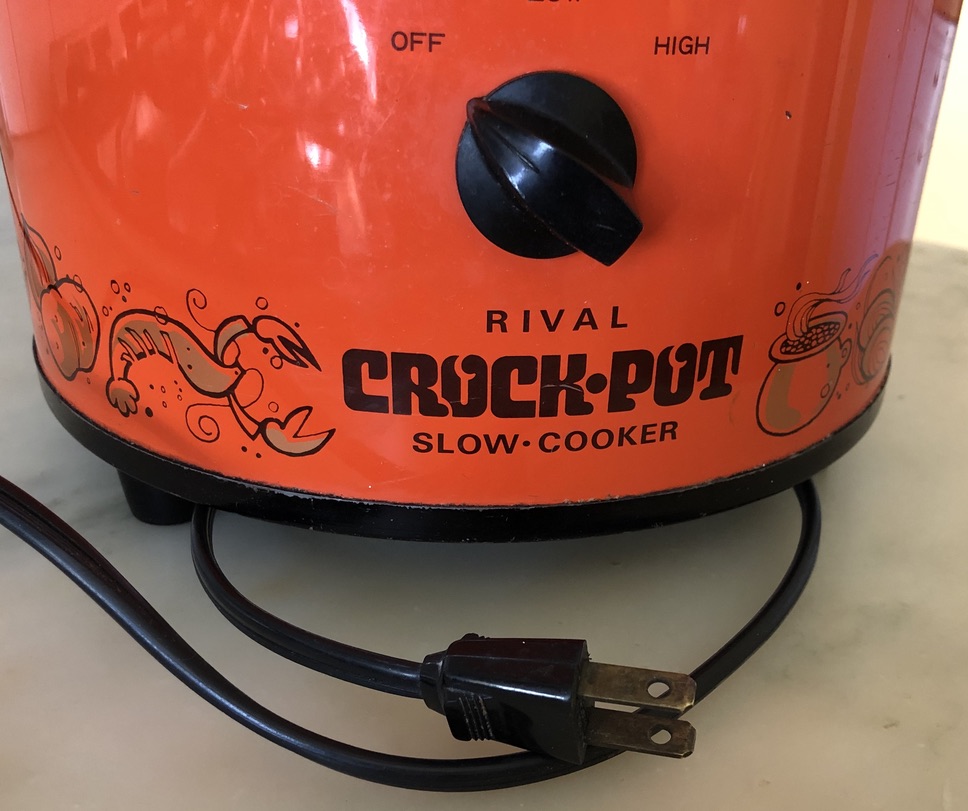
But, my prized long-running-hit kitchen appliance is a flaming orange Rival Crockpot, one of the first purchases I made in 1973 when after four years of living on savings and meager graduate-student fellowships, I finally could afford to buy some extras. I had a real job, teaching at the College of Ganado on the Navajo Indian Reservation in Arizona, and there was a fairly new large FedMart store in Window Rock, a thirty-minute drive over the Defiance Plateau. The store was much like a modern Walmart or an old-fashioned general store, with almost anything one could possibly need or want, at a low price.
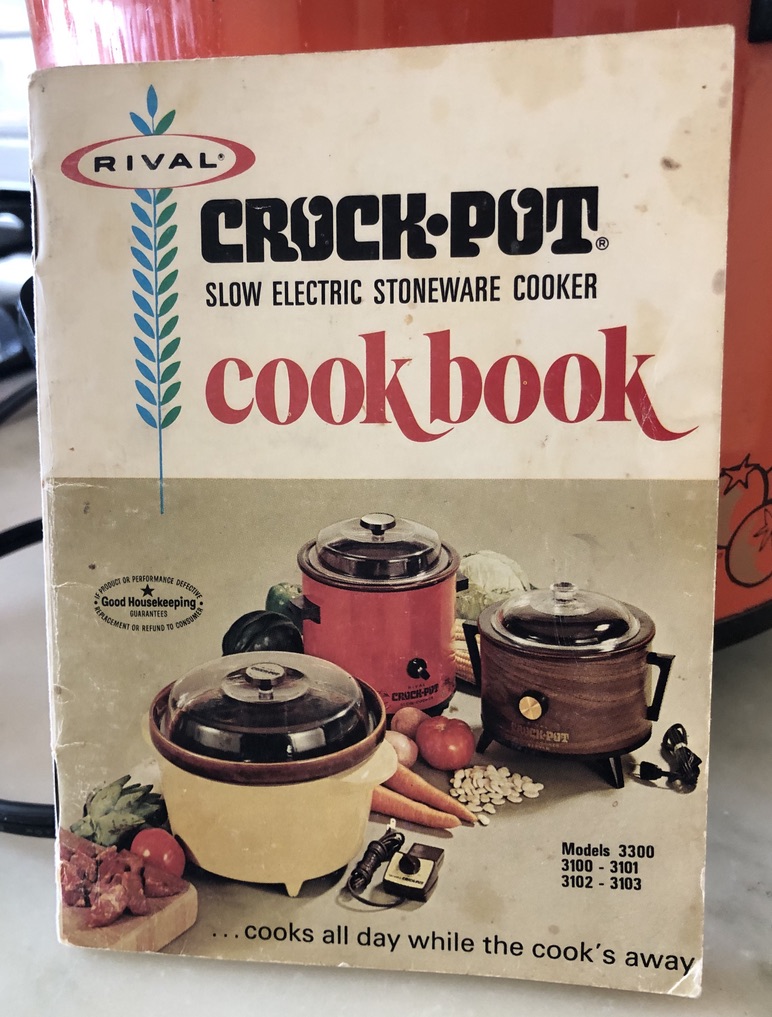
I would fill my crockpot with stew meat, carrots, potatoes, onions, and maybe some celery, garlic, and tomato sauce or paste in the morning. Then, I would work all day, or spend a day exploring the countryside before coming home to a delicious hot dinner. As the ads for the crockpot said, “It cooks all day while the cook’s away.”
I’ve never done any of the fancier things the crockpot is said to do, like make cakes or bread, but for years I’ve used it to make pot roasts, stew, and one-pot meals of various kinds. I also sometimes use it to cook dried beans, and in cold weather make hot spiced apple cider, or another old favorite from one of my mother’s close friends, “Hilma’s Holiday Glogg,” (pronounced gloog), a Swedish recipe that involves large quantities of burgundy, raisins, and cardamom seeds, served in teacups with a dollop of vodka or bourbon to top off the already-potent brew.
Over the years, I have relied on the crockpot, whether I’ve been dashing off to work or school, spending a day with guests, or hiking in the mountains. It is wonderful to come home to an aromatic hot dinner and is well worth the twenty minutes or so it takes to prepare the meat and vegetables or dried beans before rushing off in the morning, leaving the meal to cook safely for eight to twelve hours. The meat cooks first, the vegetables more slowly.
I love the simplicity of this old pot, which unlike more recent and more popular incarnations with countless buttons to push for various settings, requires nothing more than an electrical outlet. Its three settings; off, low, and high, are operated by the turn of a dial. What could be simpler? I have looked at the new instant pots, but like my new-fangled oven, which requires an instruction book to operate all its bells and whistles, they seem unnecessarily complicated, although perhaps they can do more. Sometimes less is more, and after almost fifty years, this simple appliance still works perfectly. What more could I want?
Tattered book cover, illustrations by Hilary KnightInscription in the I Hate to Cook Book, 1964Chilly-Night Chili Recipe from The I Hate to Cook Book
















 Caminobleu