Reflections on Ash Wednesday: Embracing Mortality

It is Ash Wednesday, 2023. We wait in San Francisco’s new Harvey Milk airport terminal, a spectacular tribute to the progress made in gay rights in the fifty years since the San Francisco commissioner’s assassination. My husband Kent and I are on the way home.

It is Ash Wednesday, 2023. We wait in San Francisco’s new Harvey Milk airport terminal, a spectacular tribute to the progress made in gay rights in the fifty years since the San Francisco commissioner’s assassination. My husband Kent and I are on the way home.

“I’m not going to get any ashes today. Have you seen anyone with ashes on their foreheads?”

“I haven’t noticed,” he says.

I was raised Presbyterian with a Swedish Covenant family background. Churches were plain. Crosses were bare, and there were no statues, few candles, and certainly none in front of statues of saints. Little glasses were passed along the pews for communion. There was no kneeling or walking to an altar. The Eucharist was a private affair between the pew-sitters and God. No one knew who participated and who didn’t. And no one put ashes on their foreheads on Ash Wednesday.

People walked up to the altar for a wedding or a baptism or were carried in a coffin for a funeral. They also went forward during evangelical revival meetings in answer to a call to be saved. Revival meetings, often held in tents, were not part of Presbyterian practices, but a couple of times, my Swedish Covenant relatives took me to tent meetings.

  I still hear the preacher call on a long-ago summer evening, “Come forward to Jesus! Ask for forgiveness! Be saved!”

Am I saved? I wonder. Was it enough to say, “Now I lay me down to sleep,” each night before I go to bed and bring my dimes tied in a clean handkerchief for the offering on Sunday?

As if reading my thoughts, the preacher says, “Going to church on Sunday is not enough. Come forward!”

I give my uncle a questioning look. He doesn’t go forward, although lots of people do. I want to ask if he has already gone forward, but I don’t. He shakes his head, no, don’t go.

The preacher promises we’ll be “born again” and have eternal life in heaven instead of being tortured in the flames of hell. I worry about those flames of hell, but I know that even if I “get saved” tonight, nothing will change tomorrow. If I walk up and pray to get saved, I’ll be a hypocrite, which wouldn’t be good, would it? Maybe all those people going to the front are miserable and need saving. Will they go up over and over tomorrow, next week, or next year? Have they gone up before, or is once enough?

The preacher’s voice is compelling, “Come forward to Jesus!” My heart tells me I‘ll be damned if I do and damned if I don’t.

  I sing silently, “Jesus loves me; this I know, for the Bible tells me so.”  I pray, “Forgive me, Jesus. I love you, but I’m not joining that crowd. You’re not there, but with me here, aren’t you?”

 That night, I dream of people screaming in the fires of hell.

Twenty-five years later, on my 33rd birthday, I married Ed, a divorced cradle Catholic. After years of soul-searching, I accompanied him to the St. Thomas Aquinas Newman Center at the University of New Mexico, partly because I thought his faith was stronger than mine. Newman reminded me of some of the more informal protestant churches I’d known. I attended classes, and after a nun said she wouldn’t tell me that I could not take communion, that it was a matter of my own conscience, I participated in everything, and our children were baptized.

Ed, divorced and remarried, was also not a bona fide Catholic according to official rules. He was eligible to apply for an annulment but refused to do so.

“I was married with six children. An annulment declares a marriage never existed. That is not true. My marriage was alive and good, but it died.” Like me, he followed his conscience.

I stayed at Newman for over twenty-five years, even after Ed’s death, until the archbishop removed the Dominican Order and barred women from the altar. Then, my conscience told me I had to leave. I still mourn the loss of that community.

But long before that sadness and years before Ed’s death, I asked him, “What happens on Ash Wednesday? I’ve never been. Can we go?” I remembered my childhood friends, who got ashes on their foreheads, made a fuss about not eating meat on Fridays, and wore pretty dresses and bride-like veils for the big event that was First Communion.

We go, and to my surprise, I am moved to the core.

“Dust, you are. To dust, you will return.” When I feel the fingers making the mark of the cross on my forehead, I think, “This is the ultimate reality.” I feel a deep peace and acceptance of my mortality. We’re born, we live, and we die. No exceptions.

 That’s it.

Long ago, I memorized Henry Wadsworth Longfellow’s “Psalm of Life.”

  “Dust thou art, to dust returnest, was not spoken of the soul.”

 Longfellow was right. It’s not about the soul but the body. And I am my body, and I love my body, though ever since I was born, it’s been on its way to decay and death. I continue to go to Ash Wednesday services. Recognizing that I share a common destiny with every living thing comforts me.

I look around the airport. There is not an ash-smudged forehead in sight. We fly to Las Vegas, where I see not a single one during the four-hour layover.

“No ashes anywhere,” I say to Kent. “Of course, it’s Las Vegas!” Sin City. The concourses are jammed with slot machines.

We board a long-delayed flight to Albuquerque. I’m sad I’ve missed Ash Wednesday. Should I ask Kent to smudge some ashes from the fireplace onto my forehead and say those solemn, grounding words when we get home?

 When the plane lands, I ask the young woman in the aisle seat,

“Are you getting off in Albuquerque?”

“Yes,” she says and faces me. I gasp and smile.

“You’re the first person I’ve seen today with ashes!” 

She doesn’t react or smile. She’s wearing a blue sweatsuit. Several other young women nearby are similarly dressed.

 “Are you with an athletic team?”

“Yes!”

“What kind?”

“Track.”

“What kind of track?”

“Middle distance running.”

“Oh, wow!”

I’m delighted to have met her and finally see ashes on one face today. I’m doubly pleased that she is a runner. I tell her how wonderful it is that she can do this because there was no women’s track when I was in high school. No women’s athletics at all. She’s probably wondering when this crazy old lady will shut up.

 “I am still angry that none of us were allowed the opportunity to be athletes in those days,” I tell her. “It is so wonderful you can do this!”

I’m sure she has no idea how much meeting her today means to me. I am happy to have found one person with ashes on her forehead, and even more, she is a person whose life follows a path that was denied to me.

 Even though I missed Ash Wednesday, I was not totally alone, and I am comforted. Lent continues tomorrow, and the truth remains. Dust I am. To Dust, I will return. We’re all in it together.

How My Morning Went, or Why I Get Nothing Done

Subscribe to continue reading

Subscribe to get access to the rest of this post and other subscriber-only content.

Not a Christmas Letter (Maybe New Year)

After a long absence from Caminobleu, I am sharing two December morning reflections with you instead of my usual Christmas letter.

December 19, 2024

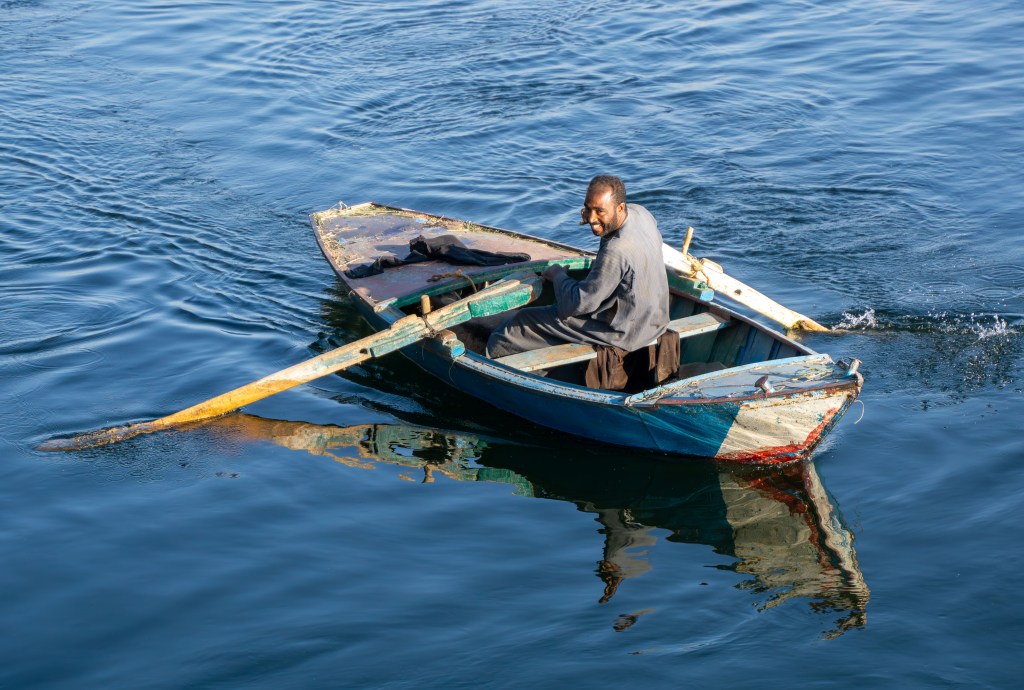
We have returned from a month in Egypt and Greece, where we immersed ourselves in the history of two ancient cultures that have influenced Western civilization for thousands of years. Yet, more than the ancient ruins and their mysteries, I was fascinated by the lives of ordinary people, the farmers and fishermen (we saw no fisherwomen) along the eternal life-giving Nile and the people still living in simple stone houses, much as their ancestors did on the small Greek island of Syros.

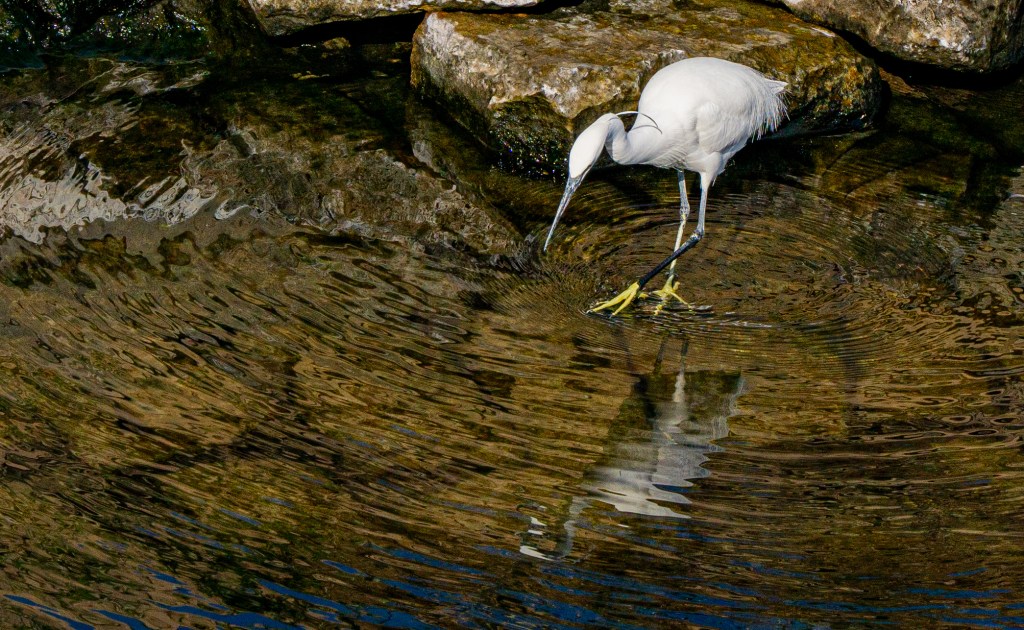
The herons, stilts, kingfishers, and small birds flitting through the trees and reeds along the Nile delighted me, as did the sunrises and sunsets. I was fascinated by the fishermen who rowed with clunky oars, usually two men in a boat: one young, one old. The old one handled the nets and studied the water, sometimes standing for a better view; the young one rowed, often in strong currents. I like to watch fishermen, perhaps because they remind me of my dad.

Snowy Egret on the Nile
Fisherman on the Nile

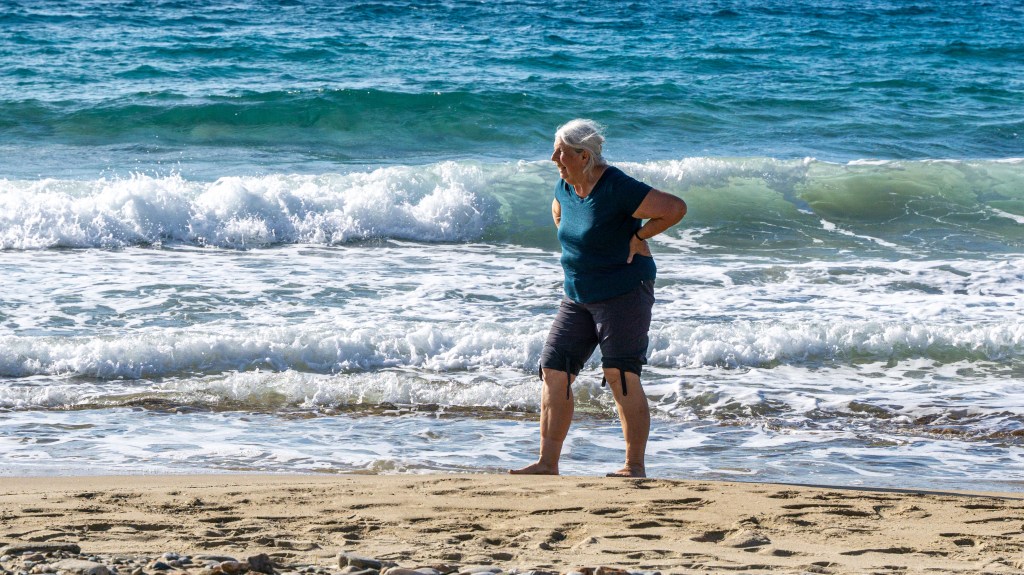
I loved the clear waters and brilliant pebbles on the Syros beaches, which reminded me of my childhood on Lake Superior. The autumn crocuses, struggling to bloom in the arid, rocky soil on the cliffs above the sea, brought back memories of autumn pilgrimages in France and Spain.

I photographed stones and waves on the beach and told Kent, “This is my happy place!”

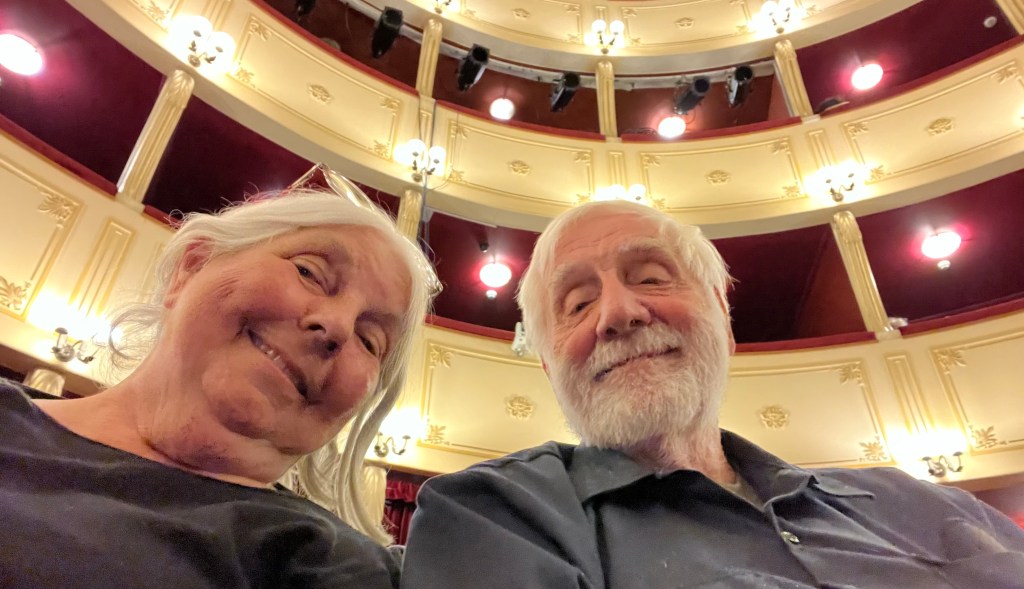
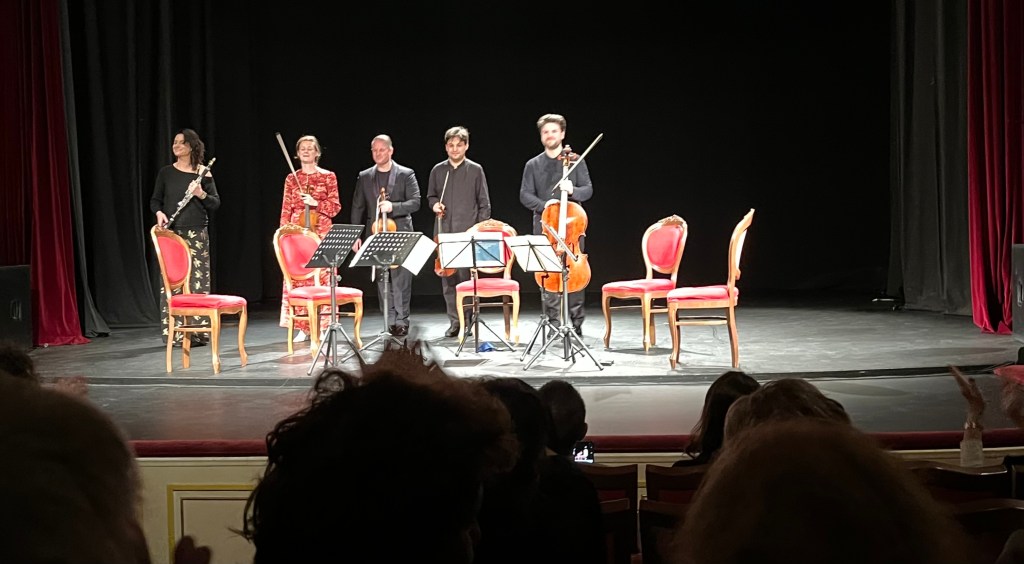
We took a ferry to Syros, seeking quiet after the intensity and crowds of Egypt and Athens. Our six-day visit coincided with the fledgling Syros International Chamber Music Festival, now in its second year. Violinist Pinchas Zukerman was the “grand old man” among the performers and organizers, but the younger musicians, their names hitherto unknown to us, were stellar. We attended all but one of five performances in the celebrated nineteenth-century Apollon theater, said to resemble La Scala.

I was touched by the participation of school children and the somewhat disorganized festival structure (performances started late, people wandered up and down forever looking for their seats, buying tickets was cumbersome, and people clapped in the wrong places). I  recalled chamber music groups from the University of Michigan performing in the school auditorium in my small hometown of Newberry, Michigan, when one affable female violinist slept on our couch and shared our small bathroom without complaint. My parents faithfully attended the performances, enjoying the rare opportunity to experience what my dad called “highbrow culture.”

For information on the Syros festival, the music played, and the biographies of the distinguished musicians, see: https://www.meet-the-violins.org/en/events

December 11, 2024

In October, we met Rebecca Reynolds at an author event she shared with Kent at Albuquerque’s Books on the Bosque. Although we’d just met, she cleverly used Kent’s decision to run away to sea as an example of an individual choosing to make a momentous change in his life. When Iwoke up this morning to begin reading the book, I found the first chapter of Thresholds of Change (Denver: Connolly Fox, 2024, so inspiring I stopped reading and wrote the following:

I am captivated by Reynolds’ use of the metaphor of the chambered nautilus. The nautilus creates new spiraled chambers as it grows, sealing each chamber except for one thread of living connective tissue called the siphuncle. As Reynolds describes it, “A core life-giving line that provides ballast and connects us to all parts of our lives, even those we’ve left behind.”

 “The journey is what’s truly important.” Our experiences in life are not “over and done.” They are all connected.

As a pilgrim who sees my life as a journey, I like the concept of a living thread connecting all parts of my life.

I recall Tennyson’s poem “Ulysses.”

 “I am a part of all that I have met.” These words mean more at eighty than they did at seventeen when I first read them in Miss Dwyer’s English class. I remember Miss Dwyer not only for what she taught but for her enthusiasm and implied belief in the importance of her subject matter. Through the siphuncle, the presence of Miss Dwyer and many family members, friends, and mentors connect my past and present.

At Miss Dwyer’s urging, we chose the final words of “Ulysses” as our Class of 1962 motto: “To strive, to seek, to find, and not to yield.” (How many of you remember your high school class motto?) This morning, I reread the poem in tears because I, too, now look back “from that sad height” (Dylan Thomas’s “Do not go gentle into that good night”) and reflect on the meaning and purpose of life from the perspective of old age.

Perhaps we live to love, learn, and grow in preparation for whatever comes next.

The dear friends I’m losing with increasing frequency remain part of my life forever. Sometimes, like this morning, my memories of them emerge through that life-giving core when they are least expected and most needed.

We have returned to a different America than the one we left. As the chaos and my feelings of foreboding intensify during this week before Christmas, I watch, wait, and pray for light to come as the world turns and the sacred sun returns.

“Yet all experience is an arch wherethro’
Gleams that untravell’d world, whose margin fades
For ever and for ever when I move.”

“Come, my friends, ‘Tis not too late to seek a newer world.” – Tennyson, “Ulysses.”

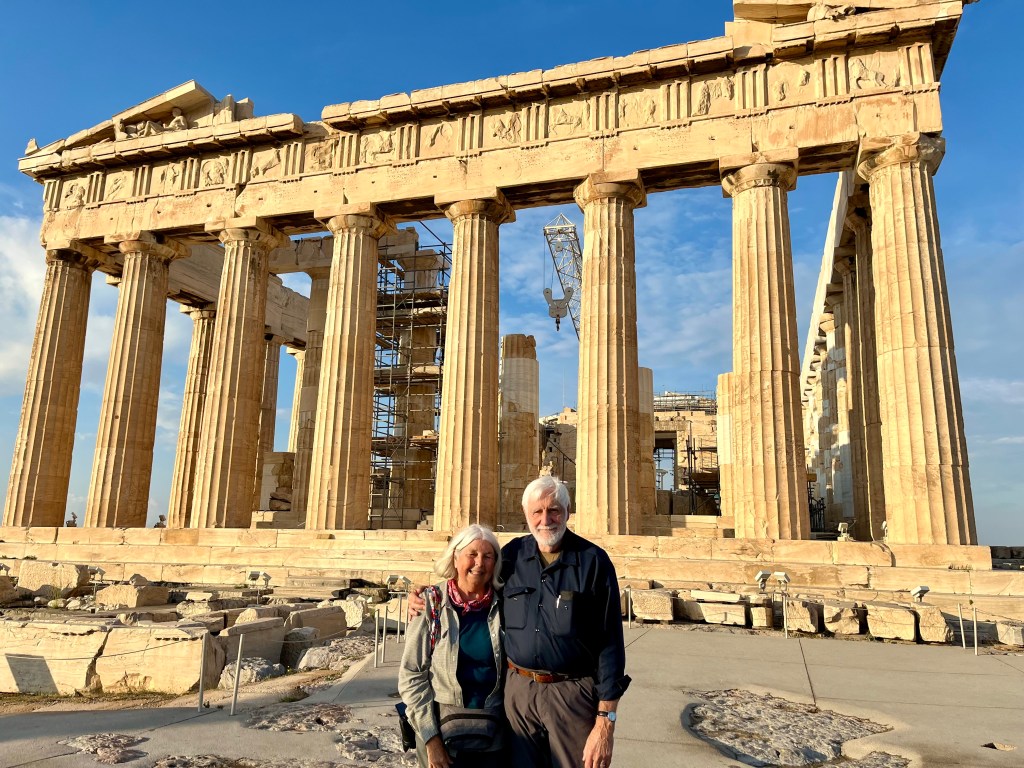
Linnea and Kent at the Acropolis early in the morning

Links to the poems:

Poems: https://www.poetryfoundation.org/poems/45392/ulysses

https://www.poetryfoundation.org/poems/46569/do-not-go-gentle-into-that-good-night

December 29, 2025

I wish you all light, strength, and happiness in the new year. And thank you to all who sent cards in the mail. I will write to you individually.

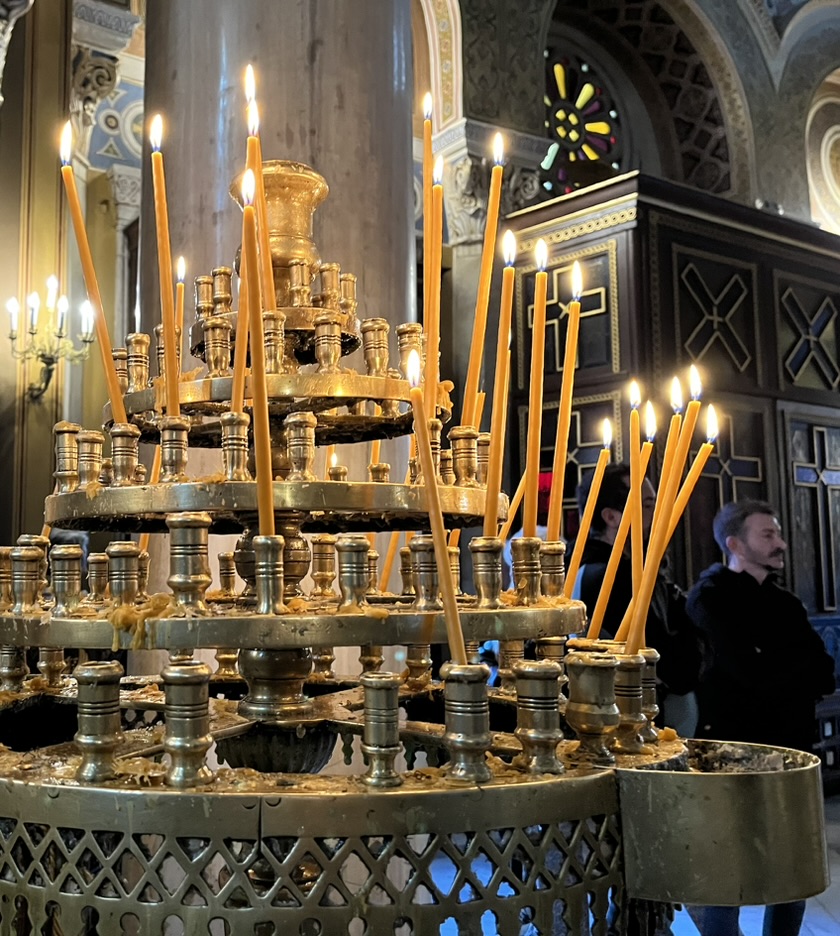
Holy Metropolitan Church of the Annunciation to the VIrgin Mary, Athens, Greece

Please also see our JacanaPress.com blog for news relating to We Ran Away to Sea, which to our surprise and delight has recently earned three awards .

Indonesia


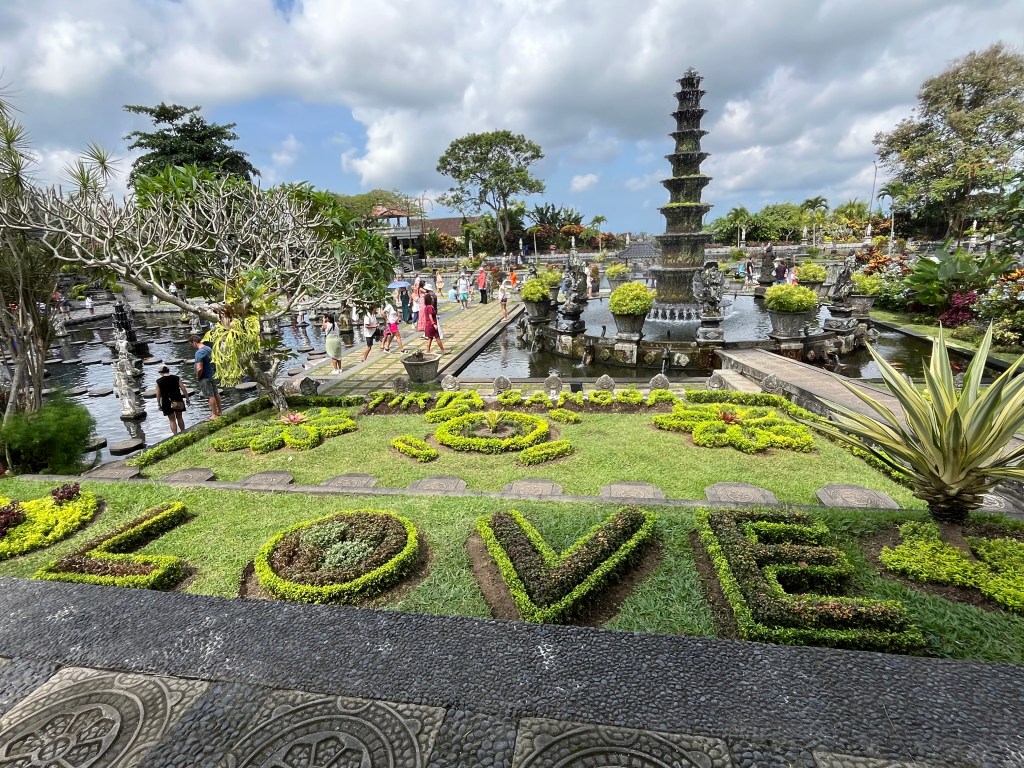
Back in San Francisco, Indonesia seems like a dream. The heat and humidity, the friendly, polite people, the heavy traffic, rice fields, trees, endless temples in Bali, beaches, and the mix of cultures are going to take time to process.


Today is my 80th birthday, but instead of partying it is, perhaps fittingly, a day of transition, a time to face the realities of old age, to be grateful for each day, and, for now, figure out how to finish this sentence before i fall asleep.

Why Is Route 66 So Famous?

The front page headlines of this morning’s Albuquerque Journal, “A Very Fun 60s Vibe” caught my eye.  The lead story refers to the re-opening this week of the Imperial Motel on the “Mother Road” in Albuquerque, a renovated 1960s era motel, complete with its classic neon sign and “butterfly roof.” (Apparently it is not yet listed on hotel booking websites.)

A secondary article mentions a Route 66 Visitor Center at the top of Nine-Mile Hill that is being turned over to the City of Albuquerque from Bernalillo County.  I’d never heard of this place, apparently built with pandemic development money and completed in 2023.

I mentioned the newspaper articles to Kent who wanted to know, “Why is Route 66 so famous? Is it the song? or the TV series? Why doesn’t anyone write about Highway 14?” 

Me: “What is Highway 14? What TV series?”

I’d never heard of either Highway 14 or the Route 66 series that ran from 1960-64 and had its own theme song (not the more famous, “Get Your Kicks on Route 66,” written by Bobby Troup in the 1940s” and first recorded by Nat King Cole).

Of course, I didn’t remember these details, but Google sent me to a lengthy Wikipedia article on the well-known song, and a separate article on the TV series.

From there it was a hop to a YouTube video featuring a couple of opening segments from the series with its theme music.

Meanwhile, the unsung Highway 14 that goes through Wyoming will be explored another day.

“I think it’s partly the song and maybe the TV series. It was the main road to California during the Dust Bowl. Let’s ask Jeanne!”

So, I texted our friend Jeanne Whitehouse Peterson, whose late husband David Kammer, did extensive research on the “Mother Road.” Jeanne is also the author of  the children’s picture book illustrated by Kimberly Bulcken Root,  Don’t Forget Winona

I’m already humming:

Well, it winds from Chicago to LA
More than two thousand miles all the way
Get your kicks on Route 66.

Jeanne replied:

David would tell you that:

(1) it’s important as the new highway system was east to west.  Route 66 was meant to arc from the (rust belt) heartland ( Chicago), through the center of the country and on to LA.

(2) Easy then for migrants in Oklahoma to get to the “promised land.”     

(3) Then the books, song and TV show because it became famous.

Steinbeck’s Grapes of Wrath? Wasn’t that set on Route 66?  “Yes,” Jeanne said, “I think he used the term “Mother Road.”

See: https://www.fhwa.dot.gov/infrastructure/back0303.cfm

I’ve found “Route 66” signs in far-flung places, including small towns in France and in a restaurant in Rome. I guess it’s true that “all roads lead to Rome.”

A route 66 sign along the Via Gebennensis in France

After Jeanne published Don’t Forget Winona, I became obsessed with the “Get Your Kicks” song and illegally downloaded at least a dozen versions from the now defunct Limewire and burned them onto a CD, which is now buried somewhere among many CDs (which reminds me, I took my Bose radio/player to a repair shop about 18 months ago, and last I checked about a year ago, it was still waiting for a replacement part).  Wikipedia has an extensive history of the many recorded versions of the song, which will now be bouncing around in my head for the rest of the day (I’ll have to hunt for that CD or maybe I’ll just ask for it on Spotify). 

A quick search of “Route 66” on Amazon brought up at least thirty-two books on the “Mother Road,” and did not include Jeanne Whitehouse Peterson’s Don’t Forget Winona.

Let’s get that keyword in the Amazon description somehow, Jeanne!

Now, maybe it’s time to take a ride or a walk on old Route 66 through Albuquerque.

Return to Tucson

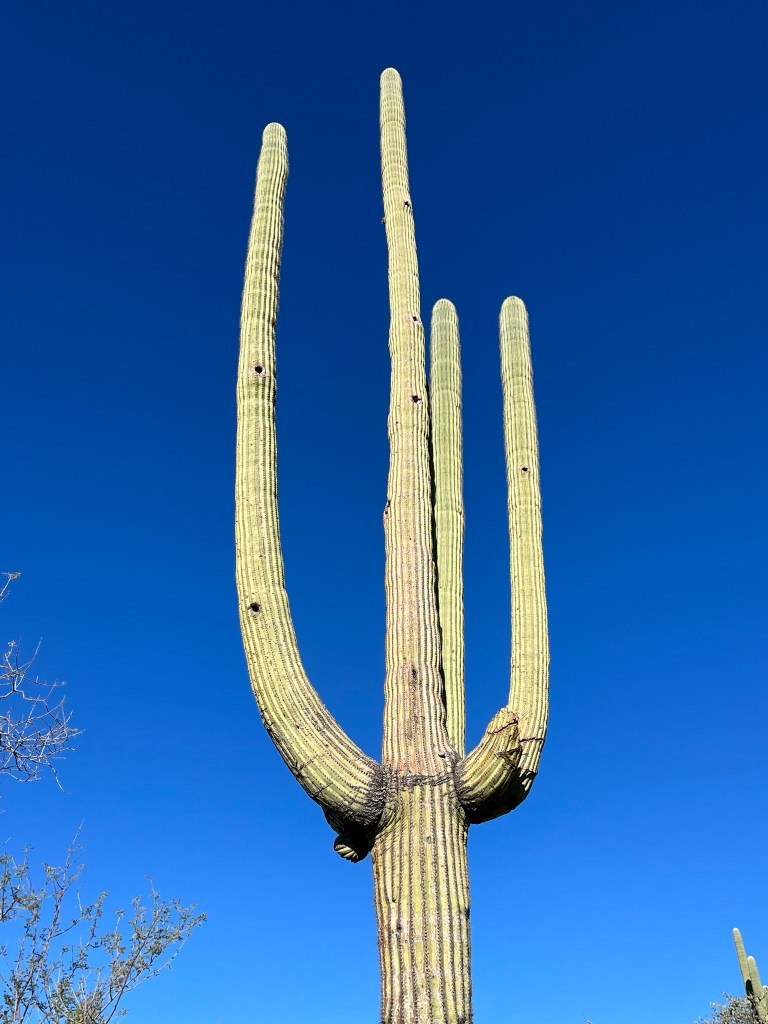
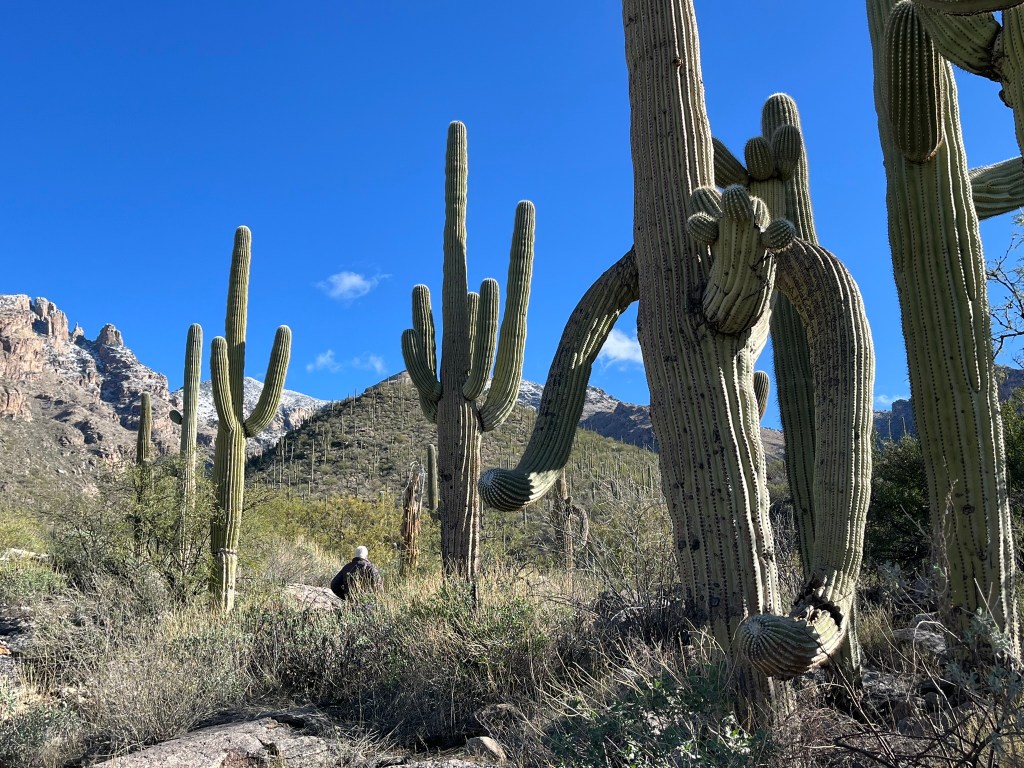
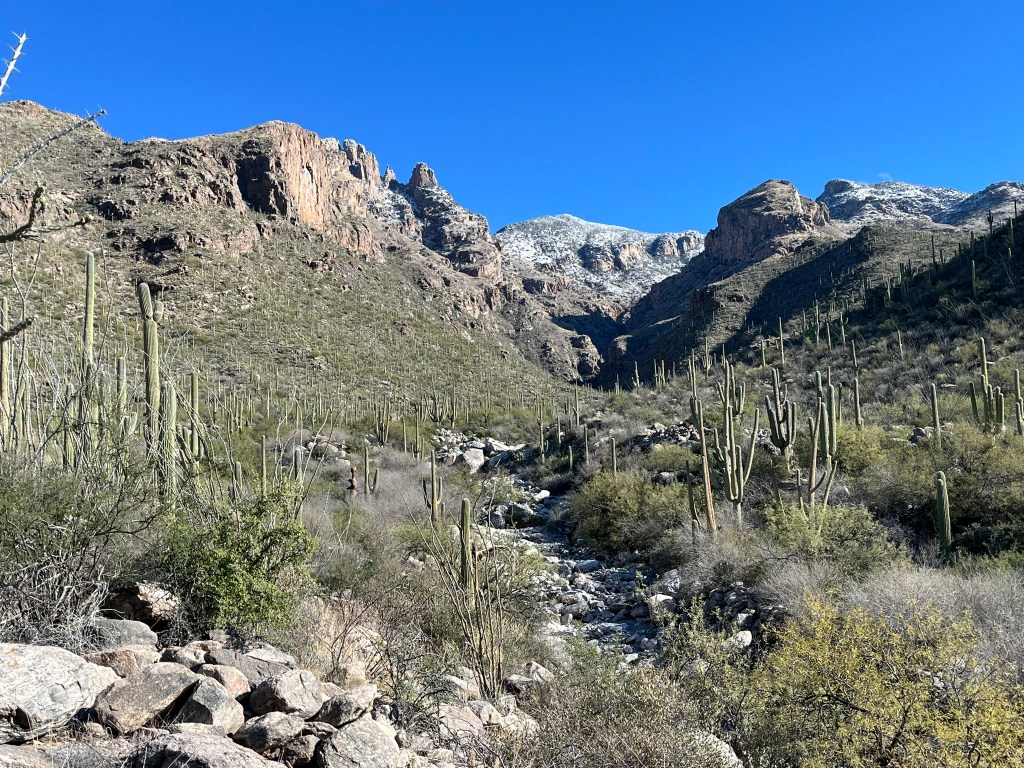
I think it’s been thirteen years since I’ve returned to Tucson to visit friends I made there in the 1970s and friends I’ve met since. So, this week, we made a whirlwind trip, driving about seven hours each way to spend two and a half days in Tucson. We weren’t able to see everyone, and I forgot to take pictures of some, but I remembered how much I loved the Sonoran Desert, even though the city has grown immensely in fifty years. 

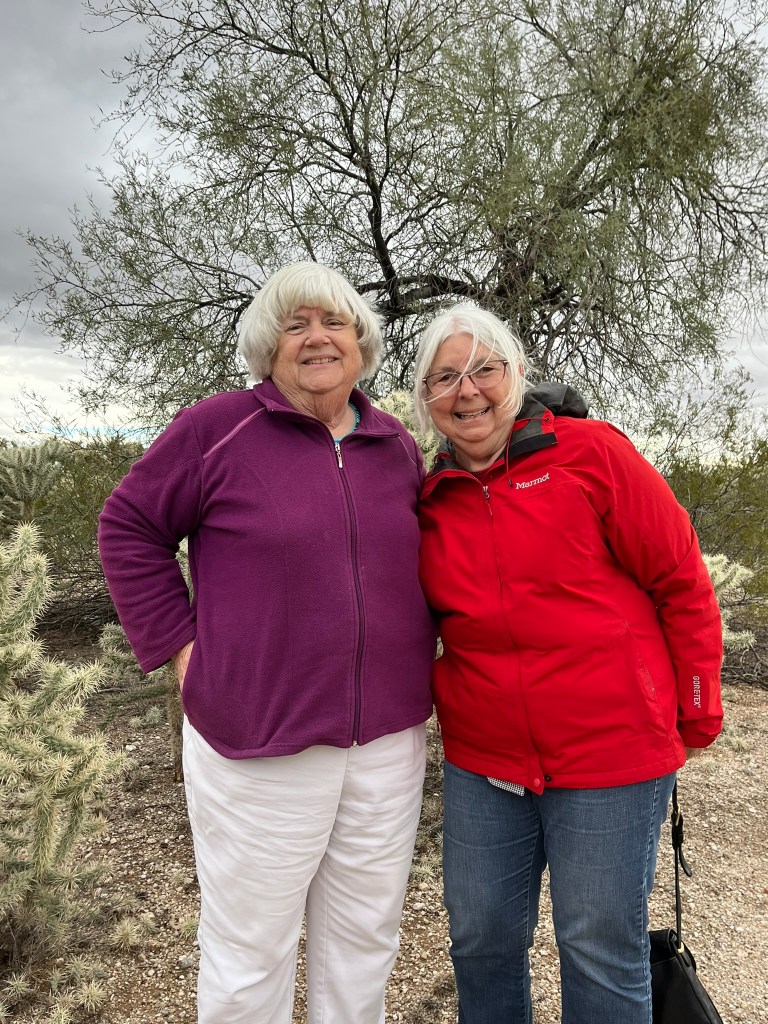
I’d hoped for warm weather, but cold rain from California swept in putting snow on the mountains, which made the desert even more beautiful. It was wonderful to connect with those we did see, including Kent’s son Jake and his friend Hayley. Mary Lyday and I had so much to talk about, we forgot to take pictures.

Finally, here’s a push for Kent’s book and a wish for a Happy Valentine’s Day! I realized that We Ran Away to Sea is also a love story! Treasure those you love. We’re not here forever.

So far behind…

I’ve taken a look at my blog for the first time in a very long time. The past six months have been dominated by working on the JacanaPress.com blog featuring my husband Kent’s book. If you look there, you’ll find glimpses of what we’ve been up to, including six intense weeks of travel through Scandinavia in December.

“Why go in the winter?” I’ve been asked. Here is my reply:

Scandinavia is where my ancestors lived 150 years ago and for centuries before that.

Why in winter?  I had a checklist: (1) I wanted a challenge and a bit of an adventure, (2) I wanted to avoid crowds and the high prices of the summer season, (3) I wanted to see the aurora borealis, (4)  winter and snow bring back memories of my Upper Michigan childhood, (5) snow is beautiful, (6) I wanted to celebrate Christmas with relatives in Sweden and enjoy the Christmas lights and festivities, (7) our grandchildren were going to be elsewhere.

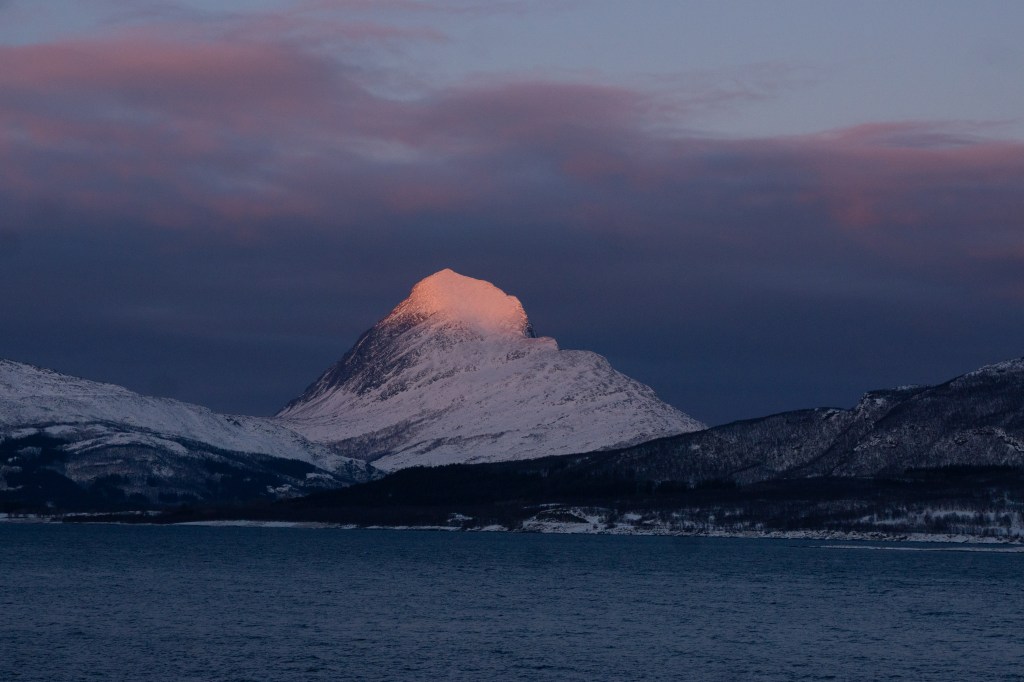
I loved the Polar Night when the day was four of five hours of twilight with the sun lurking below the horizon. I missed the sun, though, and on Santa Lucia Day, December 13, we crossed the Arctic Circle again heading south. I waited with anticipation aboard the ship (Hurtigruten’s Polarlys) for the sun to hit a high peak. My heart leaped up when I saw the first pink light hit the triangular peak I’d been watching. ”Thank you, God, thank you, Sun, for being there!” I was deeply moved. The Polar Night was beautiful, but what if I never saw the sun again?

We arrived home after our travels to face a pile of mail we still haven’t quite gotten through, repairs of things falling apart in the house (I think it missed us), preparing Kent’s lecture, “Escape to Sea: Dreams and Realities” for Oasis (it was well-received), and all the other busy activities that keep us from taking much-needed long walks.

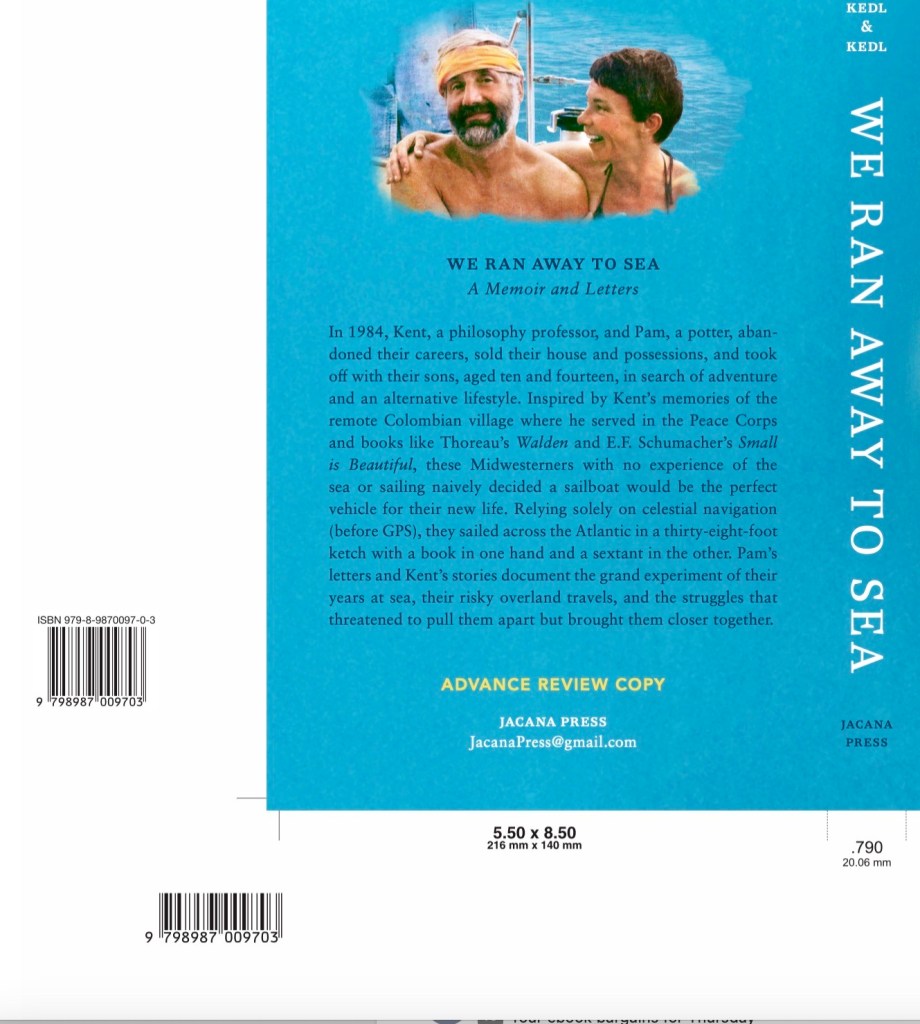
We Ran Away to Sea

May 12, 2023

It was a big day today. We got the book loaded onto IngramSpark and ordered the first paperback copy that should arrive in about a week. Publication date is set for June 27, but that could change. A PDF of the book has also been loaded onto NetGalley, so we are hoping for some reviews. We are still finding some typos and small errors (oh no!) and expect to find even more when we actually hold the paperback in our hands. It’s been a long journey so far, and there’s even more to come.

We know we didn’t choose the cover most of you preferred. We’ll see how it goes! But we have the photo of Kent and Pam on the back, if that will make you happier.

We’d love to have more reviewers, although we’re not supposed to use friends and family. I couldn’t believe my eyes when I looked for reviews of a particular book (I won’t divulge the title) this afternoon and saw it had one review of ***** (five stars). The reviewer’s name: the same as that of the author!

I can see we still have a lot to learn!

If you’re interested in reviewing let us know, and if that sounds too daunting, here are a few links to websites that provide some easy guidelines and even templates for writing reviews:

https://reedsy.com/discovery/blog/how-to-write-a-book-reviewhttps://share.reedsy.com/fiction_book_review_template_reedsy.pdfhttps://share.reedsy.com/nonfiction_book_review_template_reedsy.pdf

Day Nine on the Camino Mozárabe, Almería to Mérida, 30 March 2023

Sierra Nevadas from near the highest point on the Camino Mozárabe above Quentar near Granada, Spain.

Where are the other days? Some are on Facebook. Most nights I’ve been too tired to write. I’ll try to catch up soon., although writing on an iPhone 13 mini is not all that easy.

Another beautiful day on the Camino Mozárabe. On this Thursday 30 March we climbed to the highest point on this Camino, over 1400 meters. total walk about 8.4 miles. We started with a short big up, then a very long smooth down and gentle long climb to the top. Along the way we were buzzed by a helicopter. At the very top we walked through a surreal, blindingly white quarry. The downside, literally and figuratively was a seemingly endless rough, steep, stony track down in the blazing sun on a western slope. My hands look like rotisserie chickens, they are so brown. As we turned onto the highway about a km above the village,our friend Montserrat and Francis passed in a taxi and stopped in the middle of the highway to pick us up. What a coincidence, and much appreciated respite. A short time later we enjoyed a hearty lunch—our first actual meal of the day at the Los Angeles Bar/Cafe in Quentar ( population about 900) as a group of six pilgrims. We were just steps from our hotel, but too busy eating, drinking and chatting and too tired to take pictures, alas. We were Montserrat and Francis from Barcelona, Edgard from Belgium, and Garis from Victoria, Australia. Tomorrow Granada! all of us are in the Hotel Quentar, spanking clean with an elevator to the second (third) floor, where Kent and I have a comfy room with —-a bathtub! What a treat for aching legs and feet. I fell asleep shortly I got out with a little help from Kent!

Off We Go!

Sierra Nevada near Granada, Spain painting by John Singer Sargent

We leave for Spain today to walk our first Camino since 2019.

It’s been hard getting ready this time. We feel so much older, and technology seems to thwart us at every turn. We’re walking the less-traveled Camino Mozárabe from Alméria to Granada, Córdoba, and Mérida. We know we will not walk every step of the way, but we look forward to experiencing the stillness of remote places and the rituals of Semana Santa in Granada, Córdoba, and a few small villages in between.

I feel as uncertain, fearful, and unprepared as I did when I set out on my first Camino thirteen years ago. Maybe it is the usual pre-trip jitters, but getting ready has been unusually difficult. It is partly because we are leaving Kent’s book, We Ran Away to Sea, which has occupied us for most of the pandemic, still in progress. We anticipate publication on June 2, 2023. If anyone would like to send us a pre-publication review, even brief, let us know. We’ll send you a PDF review copy. Wish us Buen Camino!