Not a Christmas Letter (Maybe New Year)

After a long absence from Caminobleu, I am sharing two December morning reflections with you instead of my usual Christmas letter.

December 19, 2024

We have returned from a month in Egypt and Greece, where we immersed ourselves in the history of two ancient cultures that have influenced Western civilization for thousands of years. Yet, more than the ancient ruins and their mysteries, I was fascinated by the lives of ordinary people, the farmers and fishermen (we saw no fisherwomen) along the eternal life-giving Nile and the people still living in simple stone houses, much as their ancestors did on the small Greek island of Syros.

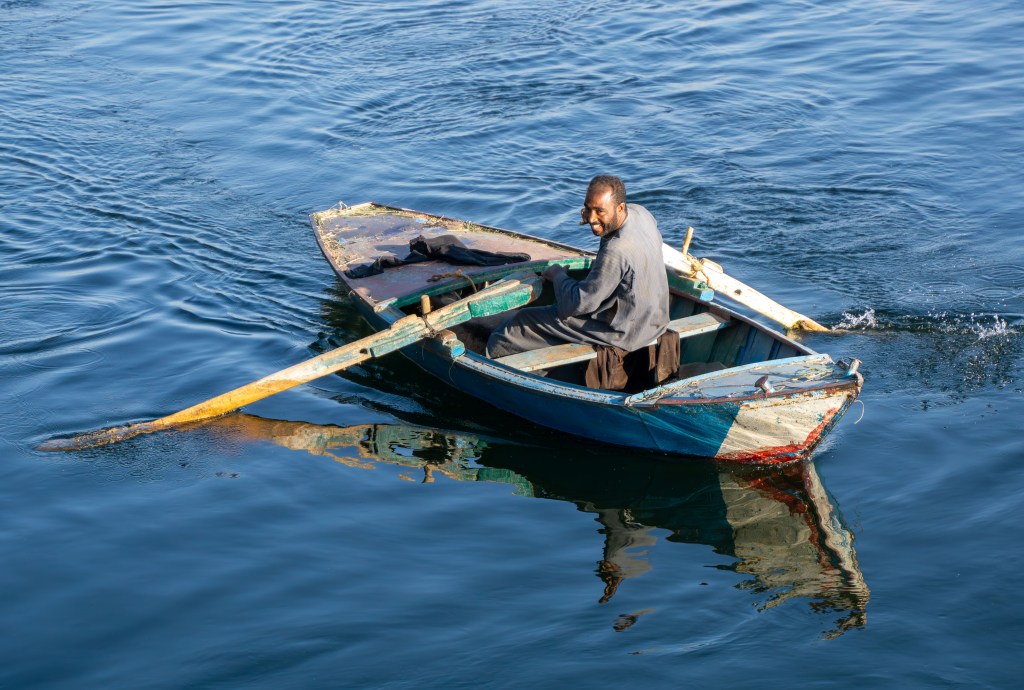
The herons, stilts, kingfishers, and small birds flitting through the trees and reeds along the Nile delighted me, as did the sunrises and sunsets. I was fascinated by the fishermen who rowed with clunky oars, usually two men in a boat: one young, one old. The old one handled the nets and studied the water, sometimes standing for a better view; the young one rowed, often in strong currents. I like to watch fishermen, perhaps because they remind me of my dad.
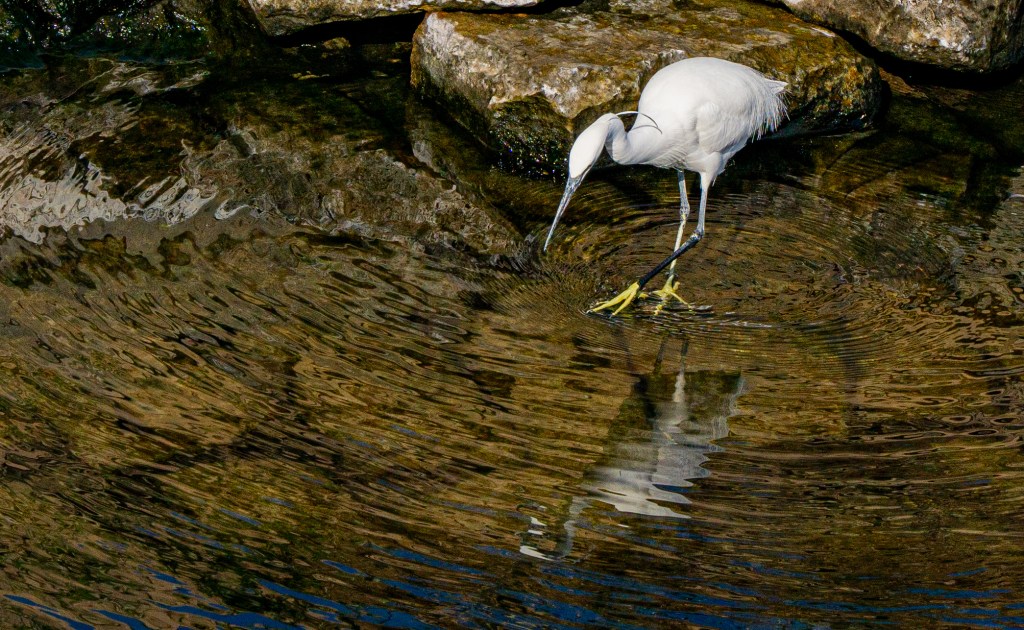
Snowy Egret on the Nile
Fisherman on the Nile

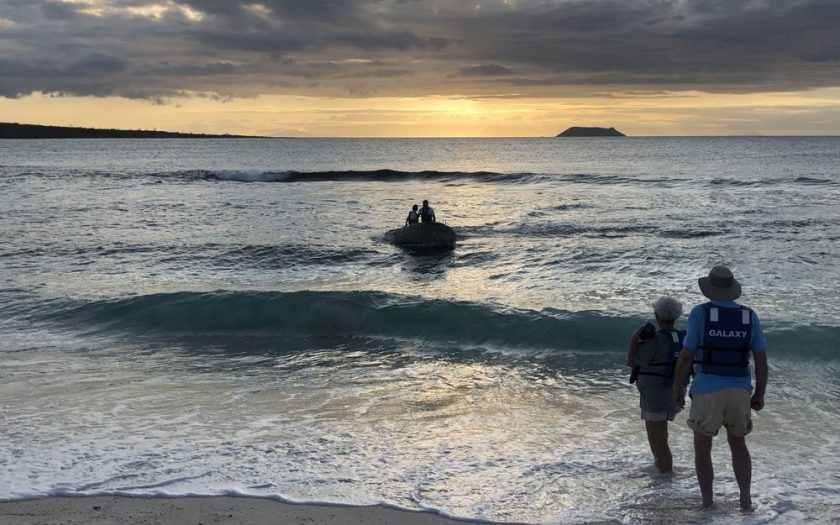
I loved the clear waters and brilliant pebbles on the Syros beaches, which reminded me of my childhood on Lake Superior. The autumn crocuses, struggling to bloom in the arid, rocky soil on the cliffs above the sea, brought back memories of autumn pilgrimages in France and Spain.

I photographed stones and waves on the beach and told Kent, “This is my happy place!”
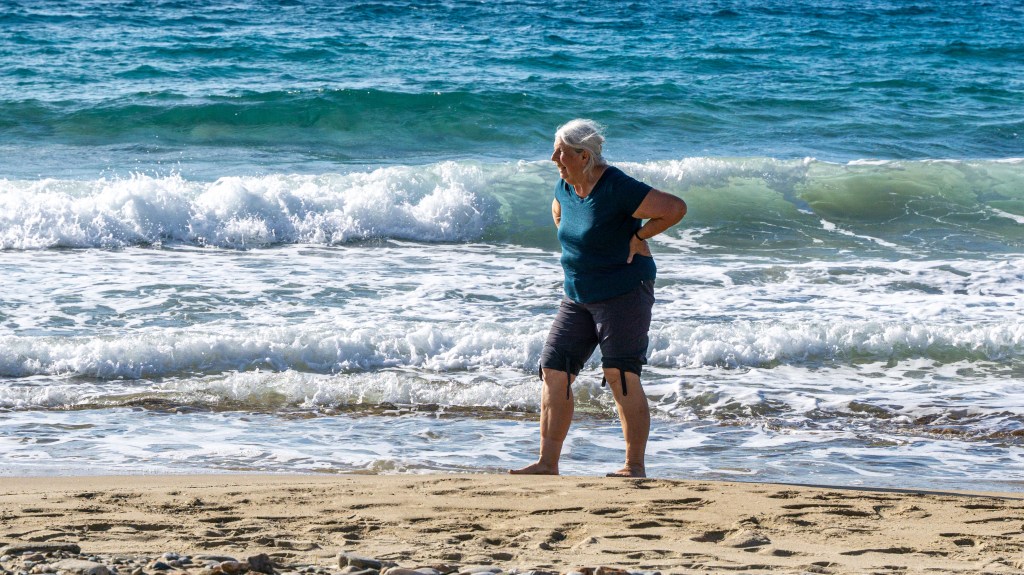
We took a ferry to Syros, seeking quiet after the intensity and crowds of Egypt and Athens. Our six-day visit coincided with the fledgling Syros International Chamber Music Festival, now in its second year. Violinist Pinchas Zukerman was the “grand old man” among the performers and organizers, but the younger musicians, their names hitherto unknown to us, were stellar. We attended all but one of five performances in the celebrated nineteenth-century Apollon theater, said to resemble La Scala.

I was touched by the participation of school children and the somewhat disorganized festival structure (performances started late, people wandered up and down forever looking for their seats, buying tickets was cumbersome, and people clapped in the wrong places). I  recalled chamber music groups from the University of Michigan performing in the school auditorium in my small hometown of Newberry, Michigan, when one affable female violinist slept on our couch and shared our small bathroom without complaint. My parents faithfully attended the performances, enjoying the rare opportunity to experience what my dad called “highbrow culture.”
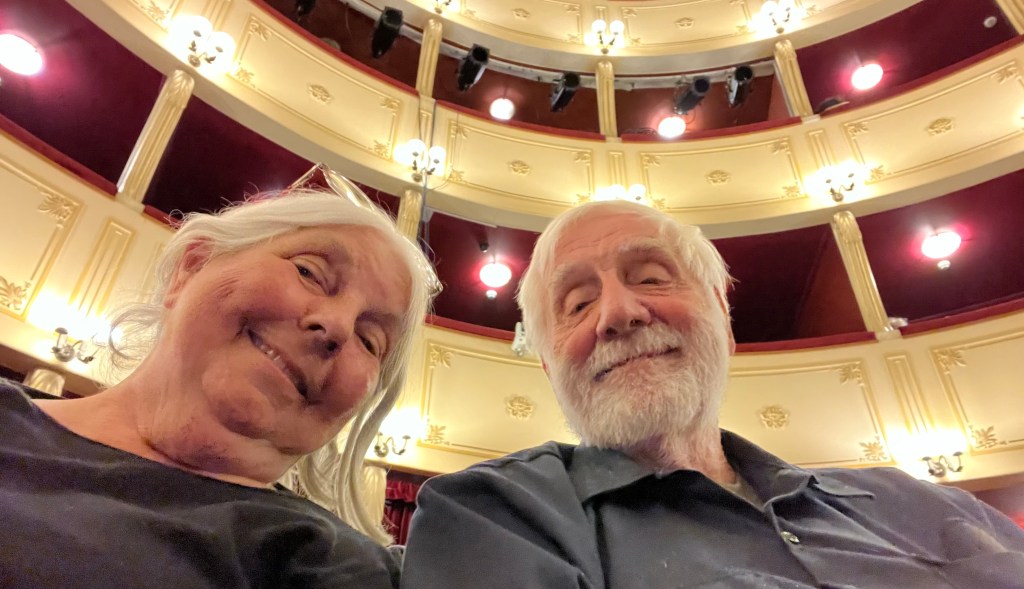
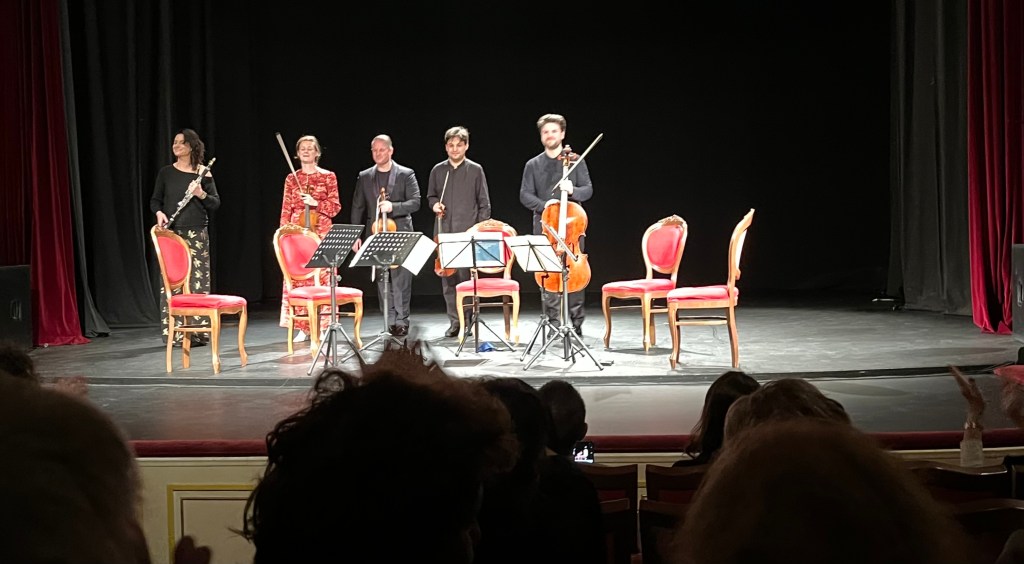
For information on the Syros festival, the music played, and the biographies of the distinguished musicians, see: https://www.meet-the-violins.org/en/events

December 11, 2024

In October, we met Rebecca Reynolds at an author event she shared with Kent at Albuquerque’s Books on the Bosque. Although we’d just met, she cleverly used Kent’s decision to run away to sea as an example of an individual choosing to make a momentous change in his life. When Iwoke up this morning to begin reading the book, I found the first chapter of Thresholds of Change (Denver: Connolly Fox, 2024, so inspiring I stopped reading and wrote the following:

I am captivated by Reynolds’ use of the metaphor of the chambered nautilus. The nautilus creates new spiraled chambers as it grows, sealing each chamber except for one thread of living connective tissue called the siphuncle. As Reynolds describes it, “A core life-giving line that provides ballast and connects us to all parts of our lives, even those we’ve left behind.”

 “The journey is what’s truly important.” Our experiences in life are not “over and done.” They are all connected.

As a pilgrim who sees my life as a journey, I like the concept of a living thread connecting all parts of my life.

I recall Tennyson’s poem “Ulysses.”

 “I am a part of all that I have met.” These words mean more at eighty than they did at seventeen when I first read them in Miss Dwyer’s English class. I remember Miss Dwyer not only for what she taught but for her enthusiasm and implied belief in the importance of her subject matter. Through the siphuncle, the presence of Miss Dwyer and many family members, friends, and mentors connect my past and present.

At Miss Dwyer’s urging, we chose the final words of “Ulysses” as our Class of 1962 motto: “To strive, to seek, to find, and not to yield.” (How many of you remember your high school class motto?) This morning, I reread the poem in tears because I, too, now look back “from that sad height” (Dylan Thomas’s “Do not go gentle into that good night”) and reflect on the meaning and purpose of life from the perspective of old age.

Perhaps we live to love, learn, and grow in preparation for whatever comes next.

The dear friends I’m losing with increasing frequency remain part of my life forever. Sometimes, like this morning, my memories of them emerge through that life-giving core when they are least expected and most needed.

We have returned to a different America than the one we left. As the chaos and my feelings of foreboding intensify during this week before Christmas, I watch, wait, and pray for light to come as the world turns and the sacred sun returns.

“Yet all experience is an arch wherethro’
Gleams that untravell’d world, whose margin fades
For ever and for ever when I move.”

“Come, my friends, ‘Tis not too late to seek a newer world.” – Tennyson, “Ulysses.”
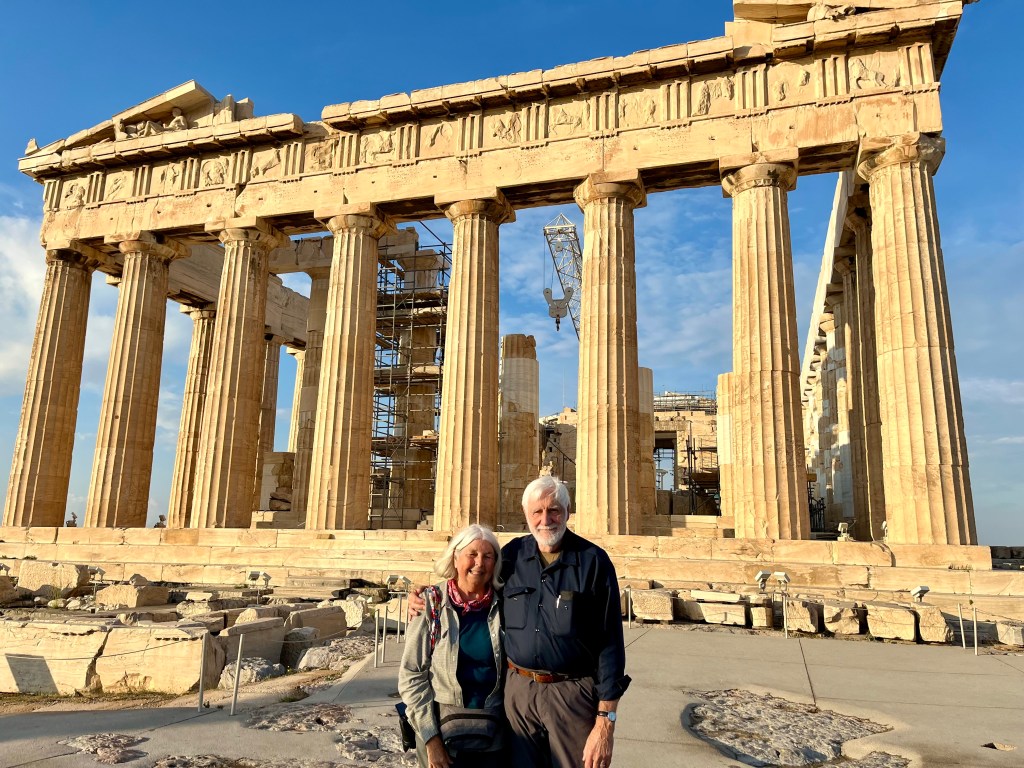
Linnea and Kent at the Acropolis early in the morning

Links to the poems:

Poems: https://www.poetryfoundation.org/poems/45392/ulysses

https://www.poetryfoundation.org/poems/46569/do-not-go-gentle-into-that-good-night

December 29, 2025

I wish you all light, strength, and happiness in the new year. And thank you to all who sent cards in the mail. I will write to you individually.

Holy Metropolitan Church of the Annunciation to the VIrgin Mary, Athens, Greece

Please also see our JacanaPress.com blog for news relating to We Ran Away to Sea, which to our surprise and delight has recently earned three awards .
Can Reading Help Us Save the World?

Elder Activist Readers (EAR): re-written August 10, 2023

Who are we?

We are a small group who began reading books on climate change and the environment in the fall of 2020, spurred by Esther Jantzen (author of Walk: Jamie Bacon’s Secret Mission on the Camino de Santiago) who introduced us to All We Can Save, the first book we all read together. Over the past couple of years, we have read many books, all of which have shaped my perceptions and stirred me to action, although what I’ve done is very little. I am still a long way from living a simple life. However, I’ve gone from ignoring climate change and thinking, “What can I do?” to realizing that learning about the issues and doing what I can is at least a start. We have read of many instances when one person’s actions have inspired others, often resulting in making an important difference. This summer’s heat and the disasters including forest fires (even in Hawaii!), flooding, failed crops, and the deaths of humans and animals have driven home the importance of changing our ways..

This morning we drove around Denver, that jewel of the Rockies, from south to north, facing bumper-to-bumper traffic and slow-downs in all directions. The mountains with remains of the winter’s snow were hazy in the distance. Where there was once farmland or grazing land where the buffalo roamed were now acres of new houses. As we poked along in halting traffic, our vehicle also contributed to the pollution, congestion and wasteful use of fossil fuels. I thought, “Look what progress has brought!” We were trapped in an unpleasant, unhealthy, unsustainable environment created in the past one-hundred years by our love for and reliance on the automobile. I’m as guilty as anyone. I love my car and my comfortable life, and I’m taking a non-essential trip for pleasure in my air-conditioned car, while people are lying on sidewalks, dying in the heat. That’s not fair, is it?

There are currently five of us who read one book every two or three months and meet via Zoom to discuss our reading. We also send each other links to articles, websites, books, films, speakers, and petitions to sign. We choose the books together and take turns leading the discussions. We have had other readers participate occasionally, and we welcome new readers, or I urge you to form your own reading group. All We Can Save, includes suggestions and guidelines

We five are all retired teachers who have lived in other countries. We include former Peace Corps volunteers, a Vista worker, and three pilgrims who have walked the Camino de Santiago more than once. Esther divides her time between Albuquerque and Mérida in Mexico when she is not traveling elsewhere; Marty Corley, Kent Kedl (author of We Ran Away to Sea, which was inspired partly by his Peace Corps experiences and Small is Beautiful), and I all live in Albuquerque. Anne Roberts faithfully joins us from her home in Longboat Key, Florida. Our current book is U.S. Poet Laureate Joy Harjo’s Poet Warrier: A Memoir which we will discuss on August 16.

Have any of you read books that you’d like to recommend? Books that have changed your life or your thinking?

Complete book list in order of reading:

Ayana Elizabeth Johnson and Katharine K. Wilkerson (eds). All We Can Save: Truth, Courage, and Solutions for the Climate Crisis, 2020 (read Jan 2021)

Shalanda H. Baker. Revolutionary Power: An Activist’s Guide to the Energy Transition, 2021 (read Mar-Apr 2021)

Arlie Hochschild. Strangers in Their Own Land: Anger and Mourning on the American Right, 2016 (read June 2021)

Kate Haworth. Doughnut Economics: Seven Ways to Think Like a 21st Century Economist, pub 2017 (read Jul/Aug 2021)

Lydia Millet. A Children’s Bible (a novel), 2020 (read Jan 2022)

Paul Hawken. Regeneration: Ending the Climate Crisis in One Generation, 2021 (read Feb/Mar 2022)

Kristen Olsen. The Soil Will Save Us, 2014 (read Apr/May 2022)

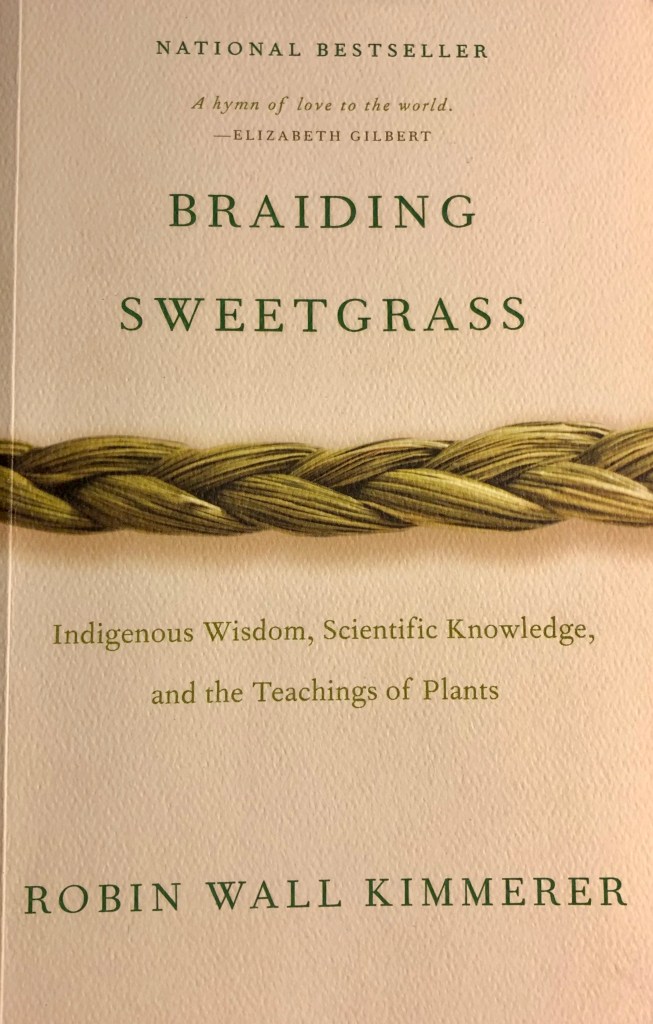
Robin Wall Kimmerer. Braiding Sweetgrass, 2013 (read June 2022)

Plus, we watched: Kiss the Ground (video)

 Imbolo Mbue. How Beautiful We Were: A Novel, 2021 (read August 2022)

Vanessa Machado de Oliveira. Hospicing Modernity Facing Humanity’s Wrongs and the Implications for Social Activism, 2021. (read September-October 2022)

E. F. Schumacher. Small is Beautiful: A Study of Economics As If People Mattered, 1973 (read December 2022)

Amitai Ghosh. The Nutmeg’s Curse: Parables for a Plant in Crisis, 2021 (read March 2023)

Sarah Augustine: The Land is Not Empty: Following Jesus in Dismantling the Doctrine of Discover, 2021 (read June 2023

Joy Harjo. Poet Warrior: A Memoir, 2021 (reading August 2023)

Reading Braiding Sweetgrass and Childhood Memories: June 27, 2022

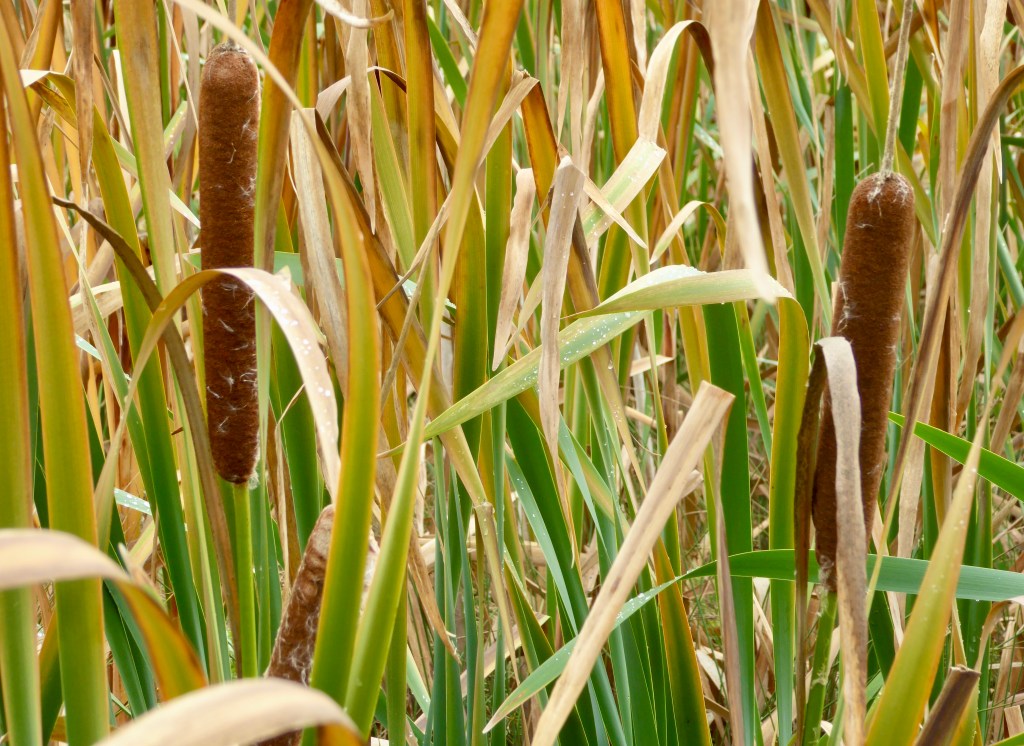
Cattails in Autumn

I woke up shortly after three this morning. I don’t know why. Perhaps I subconsciously knew that this was the birthday of my two children, now thirty-nine and forty-three years old. But I wasn’t thinking of them, and I wasn’t worrying about world problems. I was wondering what had happened to the Global Entry renewal I’d applied for months ago. Where was the notification? Had I mislaid it? My restless mind would not let me fall back to sleep.

When I despair over the fate of Mother Earth and our nation, reading and reflecting on my past can provide balance and respite. So, I got up, taking Robin Wall Kimmerer’s beautifully written Braiding Sweetgrass with me. Her book of stories combines scientific and indigenous knowledge. The chapter “Sitting in a Circle” reminded me of my childhood. Our small group of Elder Activist Readers has been sharing our responses to books on climate change and the environment for nearly two years. Each book has been enlightening and challenging us in its own way. Right now, we are reading and discussing Braiding Sweetgrass.

But before settling into the book, I needed to check on the Global Entry application. Luckily, I could log in with only a verification code texted to my phone. I discovered that the application was still in progress, just as it had been on March 17. Why? My husband got his renewal in two days. Maybe they think eighty-year-olds have no time to waste? Perhaps they discovered some secret in my past? I shot off a message to the help page (which still has not responded two weeks later) and returned to Braiding Sweetgrass and my childhood.

In the chapter “Sitting in a Circle,” Robin Wall Kimmerer takes a group of university students to the woods to discover what necessities of life they can find there. They joke about going shopping at the “Wal-marsh,” but are appropriately awed when they learn that cattails can supply almost everything needed to sustain human life.

When I was a child, cattails beckoned from the ditches along the roads in my Upper Peninsula of Michigan home. Although they looked near, they were difficult to reach without falling into deep ditches and getting wet. One day, my brother and I convinced our father to stop the car and pick some for us. It was fall, and the cattails were overripe. As we stroked the furry brown tails in the back seat of the car, they exploded into a storm of fluff that filled the air and clung to everything, much to my mother’s dismay. My father stopped the car and chucked out the offending cattails. He never picked any again, and even when they were green, they were never allowed in the car despite our begging,

t those fat brown tails and their dramatic tall leaves always fascinated me. It was not until I read Braiding Sweetgrass that I discovered the many uses of cattails. There is food in the stems, fruit, and rhizomes. Insulation and bedding can be made from fluff. Sleeping mats and roofs are constructed from waterproof leaves, and the protein-rich pollen is added to pancake flour. The stems also contain an aloe-like gel to soothe skin irritated by mosquito and black fly bites, and hands chafed from pulling the cattail leaves. I am sure local indigenous people could have told us about the many gifts cattails provide, but as far as I know, no one bothered to consult them.

In summers, we picked dandelions and braided them into crowns. But I was an adult before I made dandelion fritters. We made hats of ferns, but I have yet to eat the fiddleheads that emerge in spring. We learned that the plump, sweet red wintergreen berries and the not-so-sweet but still refreshing leaves that emerged from under the melting snow were good to eat at a time of year when little else was edible. However, we were cautioned never to pick and eat wild mushrooms, although we knew some people did. Our parents told us that one mistake in identifying a mushroom could mean death.

Although we were warned not to eat things we didn’t know about, beautiful sumac bushes with lovely, fuzzy pyramidal spikes of fruit grew on the roadside near my grandfather’s farm. “Poison sumac,” the grown-ups called it, although they couldn’t tell us whether it was poisonous. We picked some of the fruit and, risking our lives, sucked on it – discovering it had a slightly sweet, astringent taste. We suffered no ill effects, but our elders disapproved. There was no internet in those days, but today, I looked up sumac and found it is possible to buy sumac seasoning, make sumac lemonade, and use the berries for many other things. I also learned that the poison sumac plant is different and more closely related to poison ivy. I also discovered it is possible to buy ingredients made from the various parts of cattails.

We knew wild gooseberries and black and red raspberries were good to eat. We ate the sour chokecherries that grew on shrub-like trees in the fields, and juneberries that I later learned were called Amelanchier, shad, or serviceberry. Sometimes we found the branches of the juneberry bushes pulled down to the ground by bears, making it easier for us to reach any that were left.

 We ate apples that grew wild in the hedgerows along the roads. My mother told us the apples had probably grown from cores she had thrown as a child. They are growing there still – perhaps some of them from the apples I once ate and tossed.

 In August, the blueberries ripened, and word spread around town about where they grew the thickest. There were good crop years and bad. We had to watch for bears when we picked. Robert McCloskey’s Blueberries for Sal was one of the only books I had as a child that depicted a life like mine. Little Sal wore overalls, not a dress, and walked in woods and fields that looked like those I knew, not the manicured parks that passed for the woods in other books.

Kimmerer writes (on page 200) that the wildflowers and plants that flourish in old-growth forests do not return in the new-growth forests. My mother often took my brother and me into “Grammy’s woods,” a mature hardwood forest, where she showed us the spring flowers: hepaticas, bloodroot, dog-toothed violets, sweet violets, dutchman’s breeches, trilliums, jack-in-the-pulpits, lady’s slippers, and more.

My childhood friend Linda, who became an anthropologist, and I, now in our seventies, sometimes reminisce about our childhood adventures and reflect on how our explorations in the Upper Peninsula woods have influenced us. The eighteenth-century proverb goes, “Just as the twig is bent, the tree’s inclined.” Now we exchange recommendations for books and zoom lectures and try to acquire some of the indigenous knowledge we missed out on as children.

Elder Activist Readers’ Book List (in order of reading as of June 2022)

Ayana Elizabeth Johnson and Katharine K. Wilkerson (eds). All We Can Save: Truth, Courage, and Solutions for the Climate Crisis, 2020 (read Jan 2021)

Shalanda H. Baker. Revolutionary Power: An Activist’s Guide to the Energy Transition, 2021 (read Mar-Apr 2021)

Arlie Hochschild. Strangers in Their Own Land: Anger and Mourning on the American Right, 2016 (read June 2021)

Kate Haworth. Doughnut Economics: Seven Ways to Think Like a 21st Century Economist, pub 2017 (read Jul/Aug 2021)

Lydia Millet. A Children’s Bible (a novel), 2020 (read Jan 2022)

Paul Hawken. Regeneration: Ending the Climate Crisis in One Generation, 2021 (read Feb/Mar 2022)

Kristen Olsen. The Soil Will Save Us, 2014 (read Apr/May 2022)

Robin Wall Kimmerer. Braiding Sweetgrass, 2013 (read June 2022)

Plus, we watched: Kiss the Ground (video)