

Subscribe to continue reading
Subscribe to get access to the rest of this post and other subscriber-only content.

Subscribe to get access to the rest of this post and other subscriber-only content.
After a long absence from Caminobleu, I am sharing two December morning reflections with you instead of my usual Christmas letter.

December 19, 2024
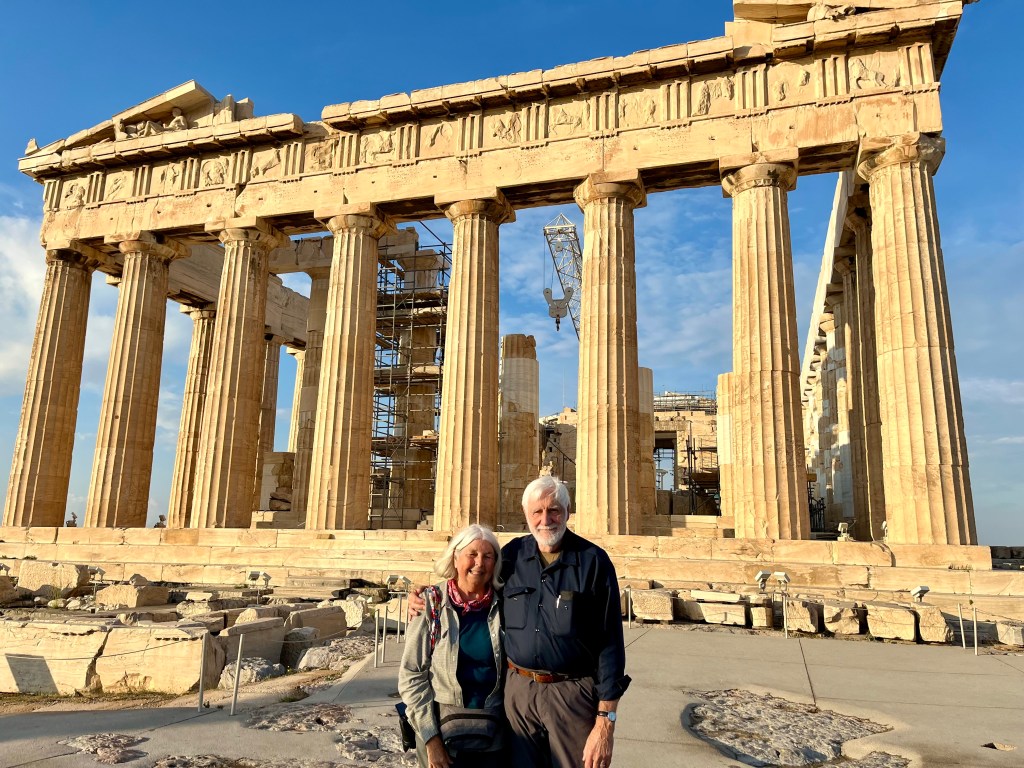
We have returned from a month in Egypt and Greece, where we immersed ourselves in the history of two ancient cultures that have influenced Western civilization for thousands of years. Yet, more than the ancient ruins and their mysteries, I was fascinated by the lives of ordinary people, the farmers and fishermen (we saw no fisherwomen) along the eternal life-giving Nile and the people still living in simple stone houses, much as their ancestors did on the small Greek island of Syros.
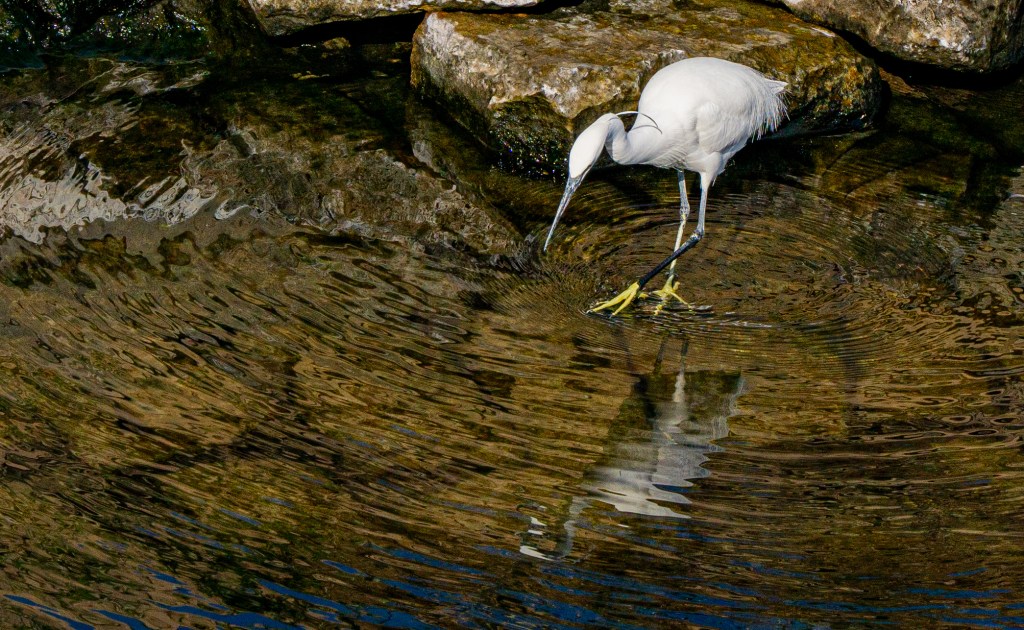
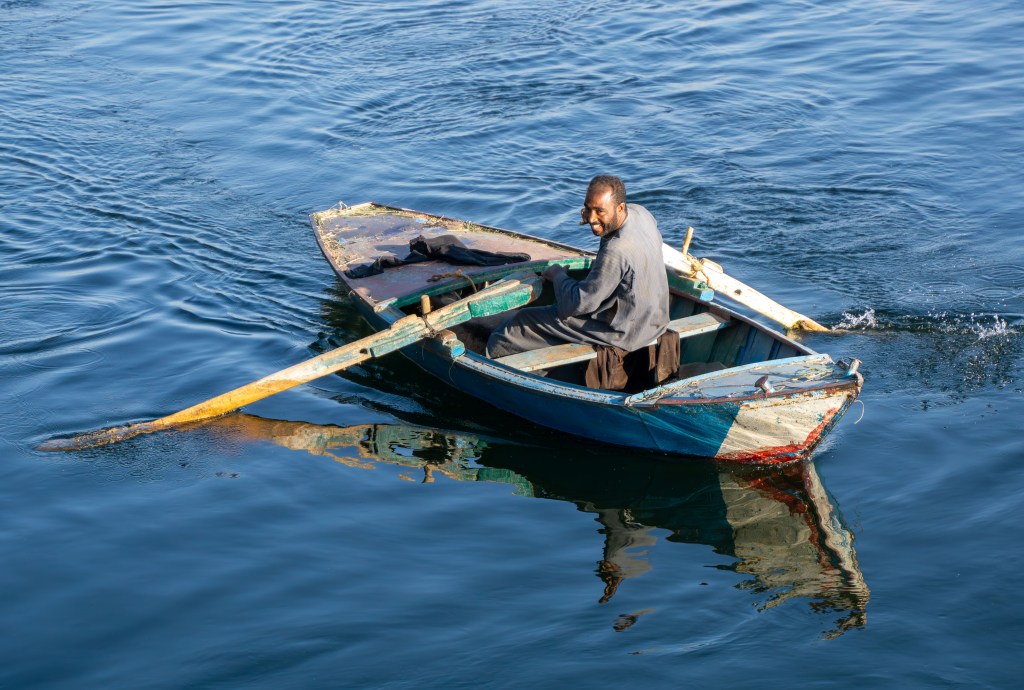
The herons, stilts, kingfishers, and small birds flitting through the trees and reeds along the Nile delighted me, as did the sunrises and sunsets. I was fascinated by the fishermen who rowed with clunky oars, usually two men in a boat: one young, one old. The old one handled the nets and studied the water, sometimes standing for a better view; the young one rowed, often in strong currents. I like to watch fishermen, perhaps because they remind me of my dad.
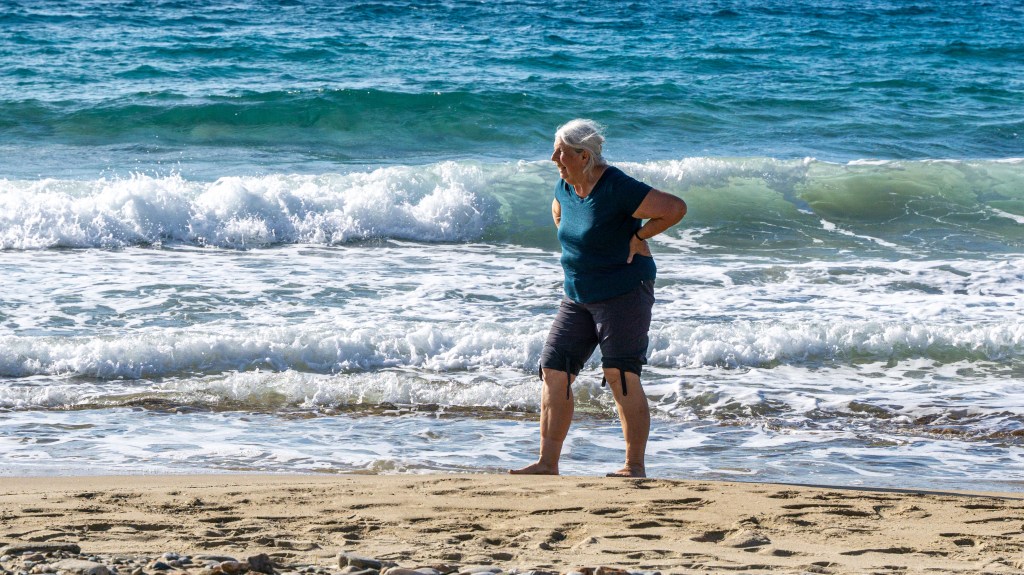
I loved the clear waters and brilliant pebbles on the Syros beaches, which reminded me of my childhood on Lake Superior. The autumn crocuses, struggling to bloom in the arid, rocky soil on the cliffs above the sea, brought back memories of autumn pilgrimages in France and Spain.


I photographed stones and waves on the beach and told Kent, “This is my happy place!”
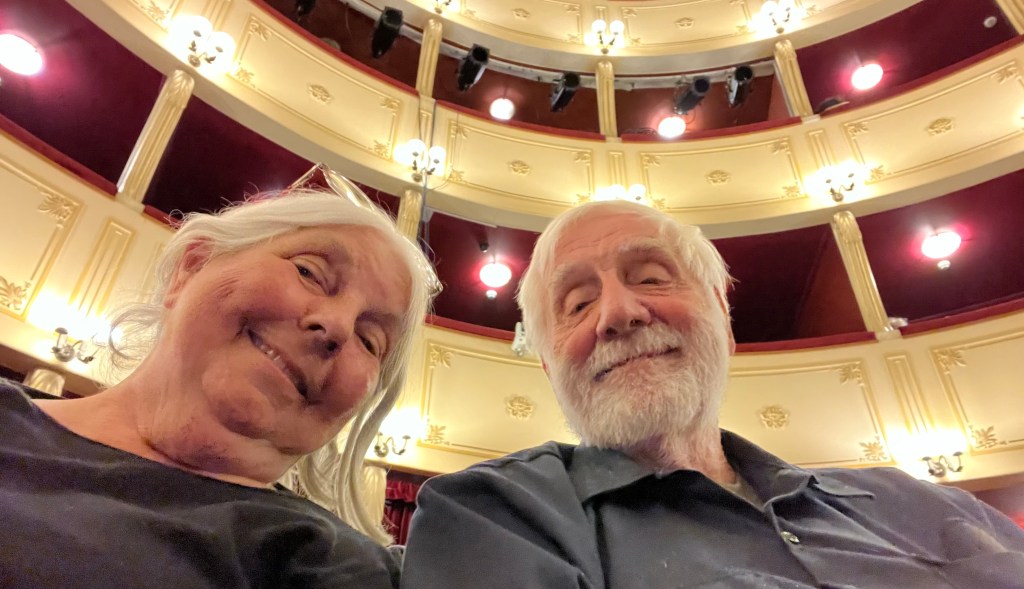
We took a ferry to Syros, seeking quiet after the intensity and crowds of Egypt and Athens. Our six-day visit coincided with the fledgling Syros International Chamber Music Festival, now in its second year. Violinist Pinchas Zukerman was the “grand old man” among the performers and organizers, but the younger musicians, their names hitherto unknown to us, were stellar. We attended all but one of five performances in the celebrated nineteenth-century Apollon theater, said to resemble La Scala.

I was touched by the participation of school children and the somewhat disorganized festival structure (performances started late, people wandered up and down forever looking for their seats, buying tickets was cumbersome, and people clapped in the wrong places). I recalled chamber music groups from the University of Michigan performing in the school auditorium in my small hometown of Newberry, Michigan, when one affable female violinist slept on our couch and shared our small bathroom without complaint. My parents faithfully attended the performances, enjoying the rare opportunity to experience what my dad called “highbrow culture.”
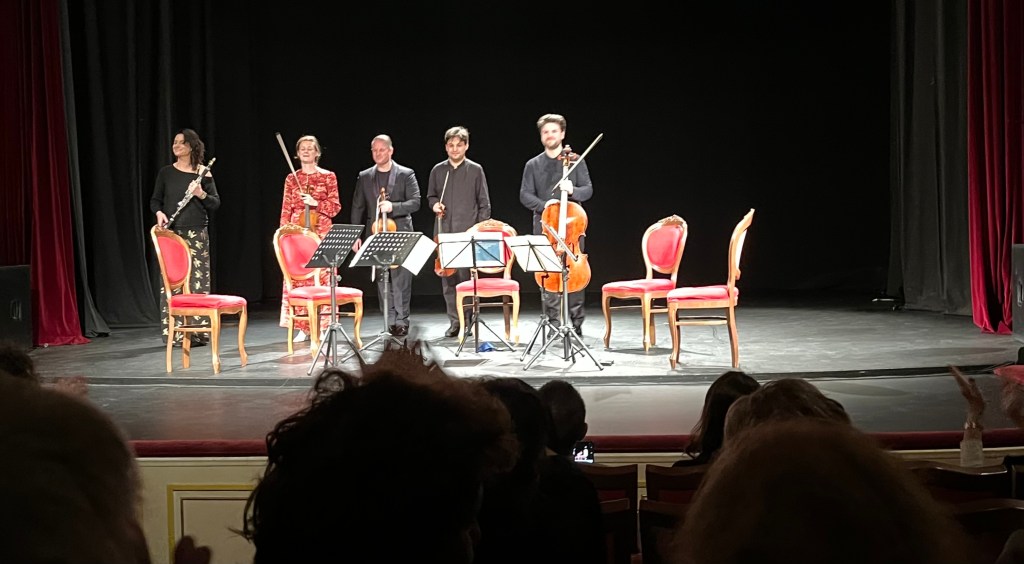
For information on the Syros festival, the music played, and the biographies of the distinguished musicians, see: https://www.meet-the-violins.org/en/events
December 11, 2024
In October, we met Rebecca Reynolds at an author event she shared with Kent at Albuquerque’s Books on the Bosque. Although we’d just met, she cleverly used Kent’s decision to run away to sea as an example of an individual choosing to make a momentous change in his life. When Iwoke up this morning to begin reading the book, I found the first chapter of Thresholds of Change (Denver: Connolly Fox, 2024, so inspiring I stopped reading and wrote the following:
I am captivated by Reynolds’ use of the metaphor of the chambered nautilus. The nautilus creates new spiraled chambers as it grows, sealing each chamber except for one thread of living connective tissue called the siphuncle. As Reynolds describes it, “A core life-giving line that provides ballast and connects us to all parts of our lives, even those we’ve left behind.”
“The journey is what’s truly important.” Our experiences in life are not “over and done.” They are all connected.
As a pilgrim who sees my life as a journey, I like the concept of a living thread connecting all parts of my life.
I recall Tennyson’s poem “Ulysses.”
“I am a part of all that I have met.” These words mean more at eighty than they did at seventeen when I first read them in Miss Dwyer’s English class. I remember Miss Dwyer not only for what she taught but for her enthusiasm and implied belief in the importance of her subject matter. Through the siphuncle, the presence of Miss Dwyer and many family members, friends, and mentors connect my past and present.
At Miss Dwyer’s urging, we chose the final words of “Ulysses” as our Class of 1962 motto: “To strive, to seek, to find, and not to yield.” (How many of you remember your high school class motto?) This morning, I reread the poem in tears because I, too, now look back “from that sad height” (Dylan Thomas’s “Do not go gentle into that good night”) and reflect on the meaning and purpose of life from the perspective of old age.
Perhaps we live to love, learn, and grow in preparation for whatever comes next.
The dear friends I’m losing with increasing frequency remain part of my life forever. Sometimes, like this morning, my memories of them emerge through that life-giving core when they are least expected and most needed.
We have returned to a different America than the one we left. As the chaos and my feelings of foreboding intensify during this week before Christmas, I watch, wait, and pray for light to come as the world turns and the sacred sun returns.
“Yet all experience is an arch wherethro’
Gleams that untravell’d world, whose margin fades
For ever and for ever when I move.”
“Come, my friends, ‘Tis not too late to seek a newer world.” – Tennyson, “Ulysses.”
Links to the poems:
Poems: https://www.poetryfoundation.org/poems/45392/ulysses
https://www.poetryfoundation.org/poems/46569/do-not-go-gentle-into-that-good-night
December 29, 2025
I wish you all light, strength, and happiness in the new year. And thank you to all who sent cards in the mail. I will write to you individually.

Please also see our JacanaPress.com blog for news relating to We Ran Away to Sea, which to our surprise and delight has recently earned three awards .
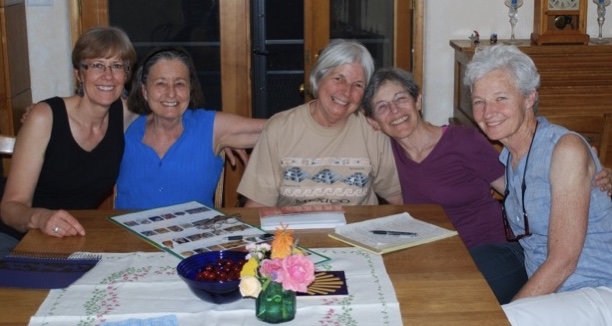
We lost our dear Joanna this week, the first of our little group called Sisters of Sorrow and Hope. We are alumni of the first cancer caregivers writing group founded in 2005 at the University of New Mexico Cancer Center by psychologist and cancer survivor Anjanette Cureton and artist, writer and cancer survivor Eleanor Schick. That group continues to this day as Family and Friends Journaling Together .
Members of that first group formed a tight bond. We cried and laughed and shared our deepest secrets, fears, and hopes. We lost husbands, lovers, parents, and friends. We encountered depths of feelings we had avoided confronting, and we supported each other.

Eventually some of us moved on (after those we cared for died). We no longer needed support to survive. New people joined the group, but they did not know all we’d shared with each other. It was time to make room for the new people with their fresh pain. But we missed each other. So, after a year or two, we informally connected again – no longer meeting weekly, but getting together every two or three months. We realized how deep our friendship was and how precious the bonds that united us. We were sisters who shared our sorrows and our hopes.
We met in each other’s homes and shared food and wine along with our stories and writing. We continued the structure established by Anjie and Eleanor, who sometimes joined us. Check-in, meditation, writing, and then reading or sharing our writing. We scheduled our first Zoom meeting for early January 2021. Then news came from Joanna that a recent CAT scan had revealed metastasized cancer and she did not have long to live. Her time was, indeed, short. She died yesterday morning, leaving her beloved dog Ziggy to her friend/sister-in -sorrow-and-hope/dog-walking companion, Melissa.
Joanna was not only our sister in sorrow and hope; she was a renowned cellist who shared her talent generously, playing in benefit concerts, the local Sunday Chatter group, and at the university’s cancer center. She was also a devoted care-giver. Announcing her final professional performance at Chatter in 2017, the Chatter group shared a three-part video of the young Joanna de Keyser many years before, playing in a Master Class with Pablo Casals.
This morning I tearfully listened to that beautiful recording of Dvorak’s music, pondering the mysteries of life and death and our grief at our loss of Joanna’s talent, generosity, and friendship. What happens to all our talents and all our accomplishments when we die? Other than some bits remaining in memories legacies they are gone. My thought is: be generous, give of ourselves now, for our gifts are ours for only a short time.
Blessings on you, dear Joanna. May you be making music with Pablo Casals and the angels this morning. Your spirit is with us.
Note: I just did a Google search for Joanna de Keyser. There are several recordings and stories about her amazing career, including a review of a recital at Carnegie Hall in New York; but to us she was mainly our cherished sister in sorrow and hope.
Update: March 2025. The Sisters of Sorrow and hope met this week in memory of our sister Valerie, whom we last gathered with in July of 2024, and who died on November 25, 2025. I don’t think any obituary has been or will be published, but I will write about her very soon.
After I wrote about Joanna on this blog, an obituary was published in the Albuquerque Journal:
https://www.legacy.com/us/obituaries/abqjournal/name/joanna-keyser-obituary?id=7666309
Please also read the comment by Joseba from Barcelona about Joanna. It was through this blog post that he found me. I am delighted to see that this post still turns up near the top of the list in a Google search for Joanna De Keyser.
And to access the Chatter Facebook post with links to her performances and a lovely photo of the very young Joanna performing for Shostakovitch.

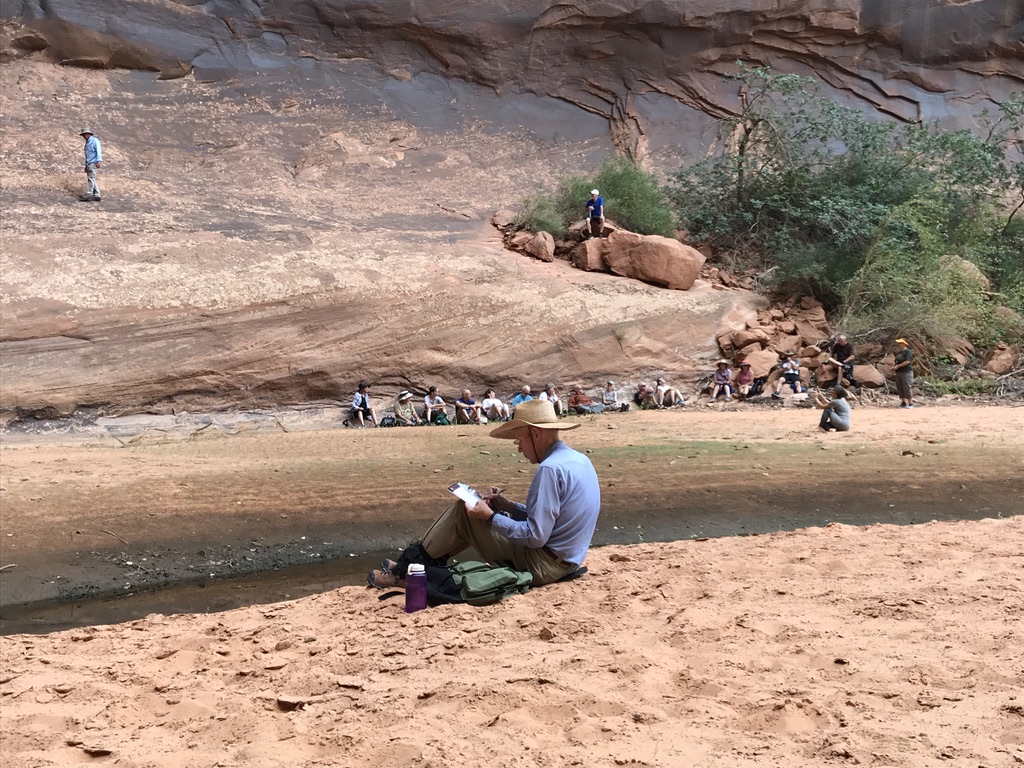
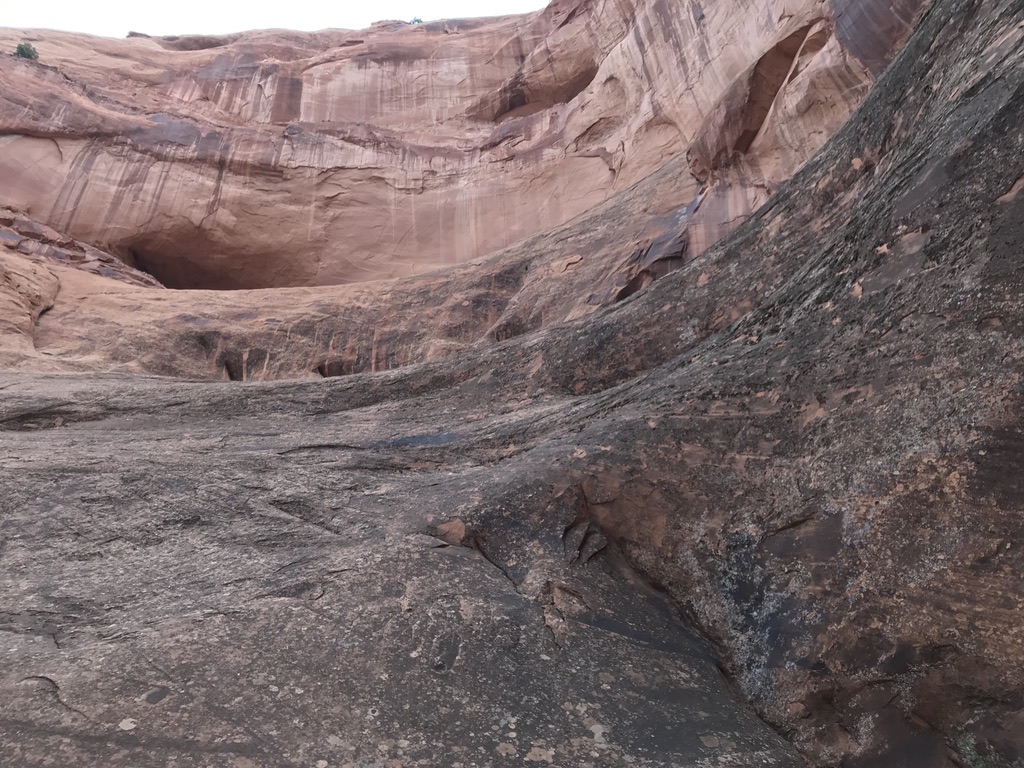
Imagine the lush sounds of a Brahms string sextet filling a red rock grotto, as a rapt audience sits around the perimeter, on rocks, on logs, and on the sand beside a small pool. This was a hike-in concert at the Moab Music Festival in Moab, Utah, now in its 27th year.
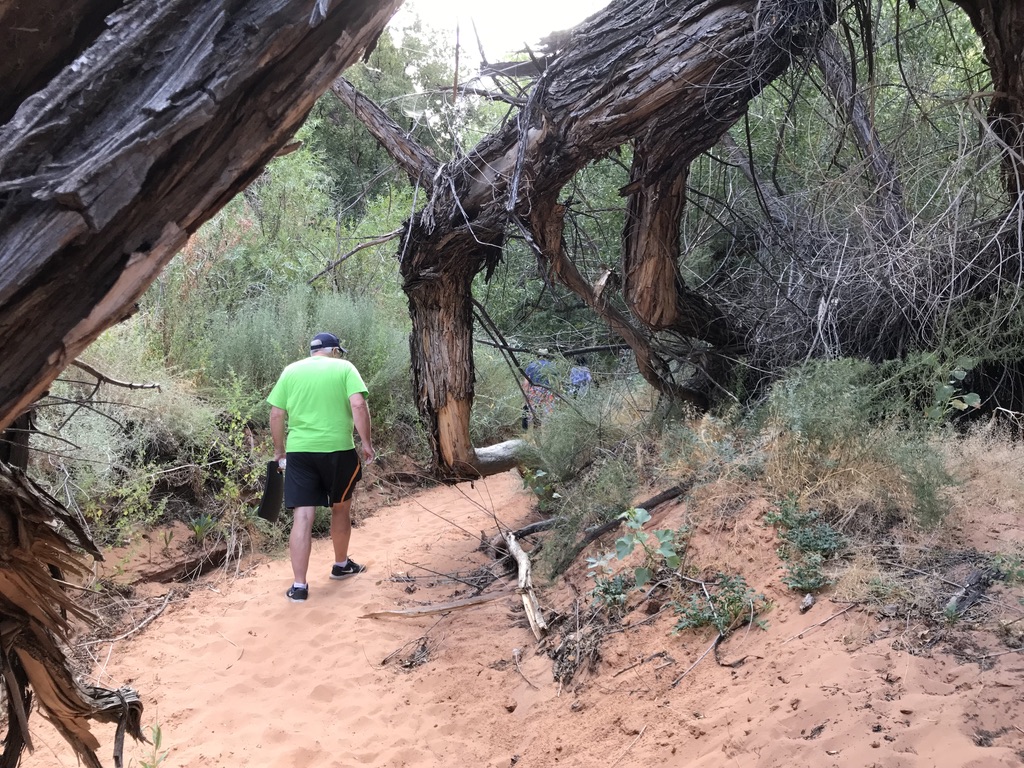
To arrive at this spot involved a twenty-minute ride on a school bus, followed by a hike through an overgrown, brushy, sometimes sandy, sometimes rocky trail that led under and over some fallen branches through a narrow slot between red cliffs. Finally, after about half-a-mile, the canyon widened into a glorious natural amphitheater aptly named “Middle Earth.”
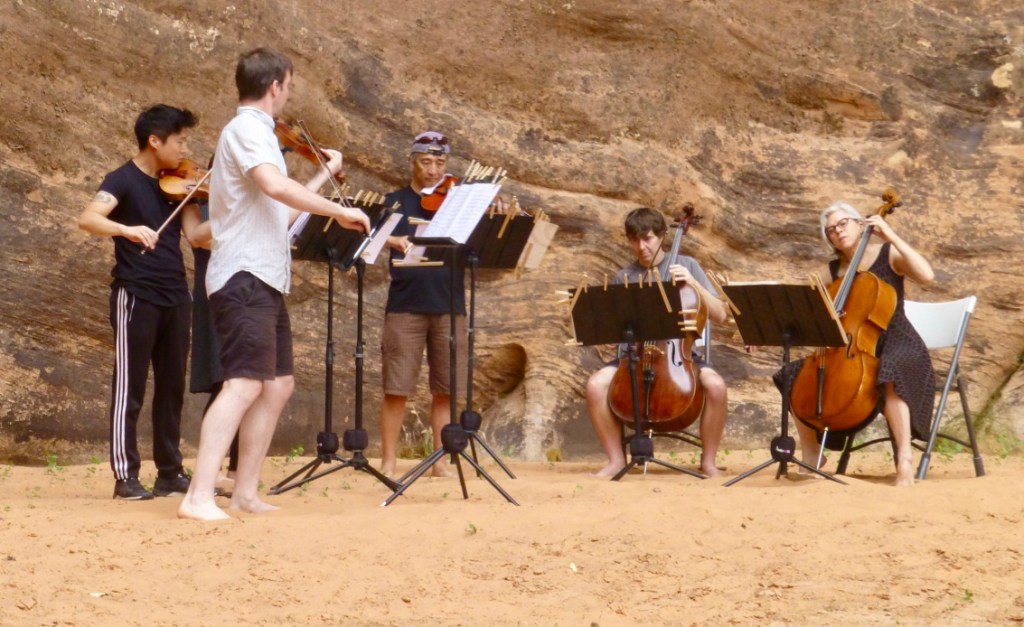
People of all ages had come from from places near and far, including Salt Lake City, Grand Junction, Chicago, and New Zealand. Kent and I drove scenic roads from Albuquerque. A PBS feature on the festival last fall introduced us to the festival and inspired us to make the trip. We were not disappointed.
https://www.pbs.org/video/moab-music-festival-draws-fans-to-utah-s-ethereal-desert-1540146431/
We attended “A Paris Revue” in historic Star Hall on Friday night, an eclectic program introduced with panache by Festival Music Director Michael Barrett, very much in the style of his mentor Leonard Bernstein.

Then early on Saturday morning, we took a bus through the red rocks east of town, to a one-mile hike down a mostly sandy wash to Mill Creek Overlook, where we heard classical and modern pieces performed by wind instruments, singly and together. Claude Debussy’s “Syrinx” for unaccompanied flute was followed by a “Duo for Oboe and Bassoon” by Heitor Villa-Lobos. Modern pieces by Toru Takemitsu, Adam Raph (for unaccompanied trombone!), and Bohuslav Martinü, were followed by several Italian baroque ensemble pieces that concluded the concert.

On Saturday evening, we traveled again by school bus, upstream along the Colorado River to the Sorrel River Ranch and Spa for a concert under a tent, in celebration of the Jazz-age genius of Bix Beiderbecke. Food and drinks were available for purchase, and intermission came just in time to allow us to walk about the grounds along the river and view the red rock buttes in the distance turn even redder in the setting sun.

For Kent and me, whose musical tastes are eclectic, who enjoy nature and a bit of adventure, and who are willing to risk a bit of uncertainty, the Moab Music Festival was pure delight. The uncertainty? The dreamy performance of Brahms in Middle Earth was abruptly interrupted by a flash rainstorm, resulting in an unplanned, hasty exodus along that narrow brushy trail, followed by a return to Star Hall for the concert’s conclusion, with performers and audience alike still dressed in their hiking gear.


Tickets for the more expensive concerts, which involve travel by raft are already on sale for the 2020 season.
 Caminobleu